Conquering the Chaos: Practical Reinforcement Learning in the Real World
Introduction
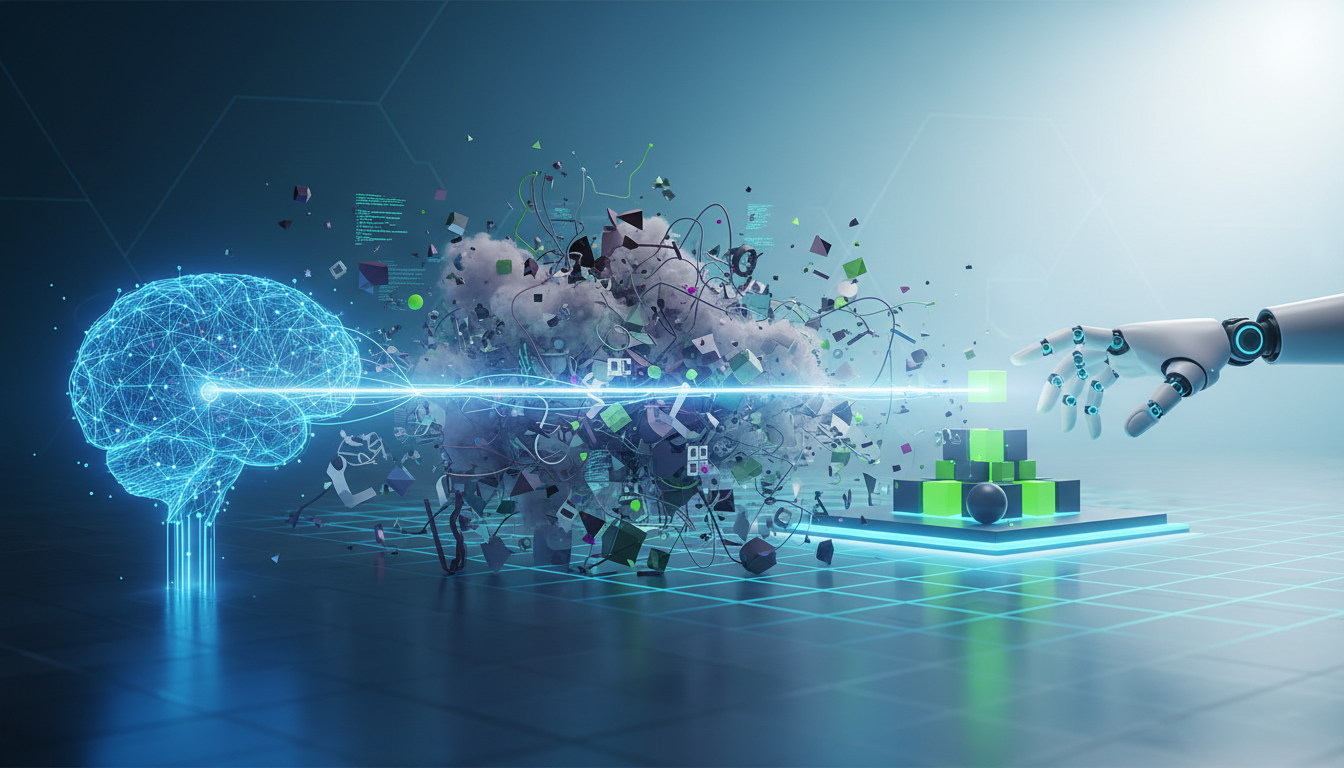
Reinforcement Learning (RL) is like the rebellious teenager of the AI world. In controlled environments, it behaves predictably, delivering impressive results. Yet, when unleashed into the real world, complete with its unpredictable chaos, RL faces challenges that can turn promising AI initiatives into frustrating endeavors. The real-world application of RL is plagued with issues such as partial and noisy observations, ambiguous rewards, and environments that are ever-changing. However, with the right strategies, even this unruly domain can be tamed to yield groundbreaking results.
Understanding Real-World Challenges
Before venturing into real-world RL, it is crucial to grasp the inherent complexities involved. Unlike controlled simulators, real-world environments present partial observability, delayed rewards, and non-stationary distributions. Data collection is both slow and costly, and errors can have significant consequences. These factors necessitate a shift from traditional RL approaches, which often rely on idealized assumptions, to strategies that can adapt and thrive amidst uncertainty.
Reframing the Problem
The first step in addressing real-world RL challenges is to reframe the problem to fit within the RL theoretical framework. Understanding Markov Decision Processes (MDPs) and Partially Observable MDPs (POMDPs) is fundamental as they lay the groundwork for modeling environments where agents interact. By transforming real-world scenarios into structured MDPs, you can leverage RL's capabilities more effectively.
Policy Optimization Techniques
Once the problem is reframed, selecting appropriate policy optimization techniques becomes essential. Traditional methods like Actor-Critic and Proximal Policy Optimization (PPO) have proven effective beyond academic settings. These techniques ensure that policies are not only optimized for performance but also adhere to safety constraints and adaptability requirements that the real world demands.
The Importance of Scale
Scale plays a vital role in executing RL successfully in real-world applications. Training a sophisticated RL agent requires extensive computational resources and data. The distributed actor-learner architecture offers a solution by decoupling environment interaction from policy optimization. This architecture enables multiple agents to collect diverse experiences in parallel, enhancing sample efficiency and stabilizing training processes.
Applying RL to a Real-World Scenario
Consider the scenario of training an RL agent for self-driving cars. A simulated environment can be designed to mimic real-world driving conditions, including pedestrians and varying terrains. The agent receives inputs like camera feeds and LiDAR data, while its action space encompasses vehicle controls such as steering and throttle. The reward system encourages safe, efficient driving, penalizing collisions and traffic violations.
Distributed Actor-Learner Architecture
In this architecture, multiple actors interact with the environment using local copies of the policy, while a centralized learner updates the policy and value networks. This separation allows for parallel data collection, reducing the correlation in updates and enhancing learning efficiency. However, synchronization remains a challenge, as actors must wait for the learner to update the policy, creating bottlenecks.
IMPALA: Overcoming Synchronization Bottlenecks
DeepMind's IMPALA framework addresses synchronization issues by introducing V-Trace, which allows off-policy corrections. This enables continuous data collection without waiting for policy updates, significantly improving training throughput. By allowing actors to use slightly outdated policies and correcting for this through importance sampling, IMPALA maintains stability while maximizing resource utilization.
Conclusion
Real-world RL is undeniably complex, yet with strategic problem reframing, robust policy optimization, and scalable architectures, it becomes feasible to harness RL's potential beyond controlled environments. By adopting distributed architectures and frameworks like IMPALA, we can build RL systems that not only survive but thrive in the unpredictable landscapes of real-world applications.
Mastering these strategies paves the way for RL systems that operate in dynamic domains, from advanced gaming to autonomous vehicles, ultimately closing the gap between academic research and practical implementation.
Saksham Gupta
Founder & CEOSaksham Gupta is the Co-Founder and Technology lead at Edubild. With extensive experience in enterprise AI, LLM systems, and B2B integration, he writes about the practical side of building AI products that work in production. Connect with him on LinkedIn for more insights on AI engineering and enterprise technology.