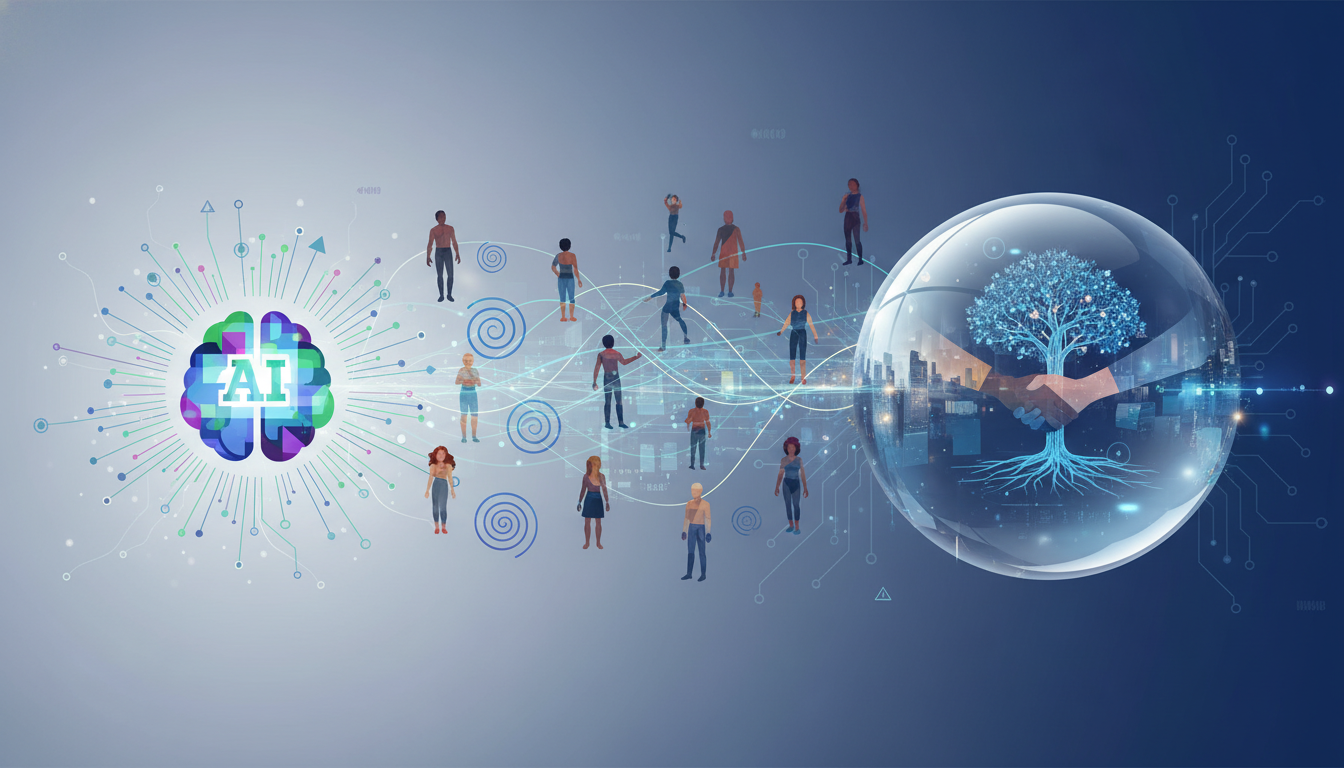
Empowering AI: How Inclusion and Representation Can Transform Technology
Artificial Intelligence (AI) is becoming an indispensable part of our daily lives, influencing everything from work to entertainment. However, its transformative power can only be fully realized if it reflects the diverse tapestry of human existence. The challenge lies in ensuring that AI systems are trained on diverse and representative data. This requires a concerted effort from communities and technology developers alike to ensure that AI does not perpetuate stereotypes or overlook marginalized groups.
The Importance of Inclusive Representation
AI systems learn from the data they are exposed to, which often mirrors societal biases and omissions. This is particularly problematic for marginalized communities, including the estimated 1.3 billion people living with disabilities worldwide. Historically, these groups have been underrepresented in both datasets and the criteria used to evaluate AI outputs. As a result, AI-generated depictions of these communities can be inaccurate or even offensive.
The absence of accurate representation is not merely a technical oversight; it has real-world implications. It shapes societal perceptions and can influence access to opportunities in areas like education and employment. Therefore, inclusive representation in AI is not just a matter of fairness; it is a necessity for social equity.
Community-Driven AI Development
To address these challenges, a new approach is emerging that emphasizes collaboration with the very communities AI aims to serve. By engaging directly with these groups, technology developers can create AI systems that are more accurate and inclusive. This approach is exemplified by initiatives like those undertaken by Microsoft in partnership with various organizations.
For instance, the Kilimanjaro Blind Trust Africa is working with Microsoft to develop more inclusive image datasets that accurately reflect the lives of people with vision disabilities. By involving community members in the process of selecting and annotating images, the initiative ensures that the resulting AI systems are grounded in real experiences.
Similarly, Ottobock, a global prosthetics manufacturer, is collaborating with Microsoft to collect images of amputees participating in everyday activities. This initiative challenges the narrow and often stereotypical portrayals of people with limb differences, offering a more holistic view of their lives.
The Role of Technological Scaffolding
While communities play a crucial role in defining what constitutes good representation, technology companies can provide the necessary scaffolding to support these efforts. This involves developing tools and platforms that facilitate community participation in AI development and evaluation.
One such example is the creation of open-source platforms that host community-generated image libraries. These platforms allow other developers to access diverse datasets, thereby promoting more inclusive AI models. By decentralizing data ownership and control, these platforms empower communities to have a say in how their information is used and represented.
Evaluation and Continuous Improvement
Beyond training data, communities should also be involved in evaluating AI systems. This is particularly important for ensuring that AI models meet the diverse needs of different cultural and social contexts. For example, in India, Microsoft Research is working with civil society organizations to develop evaluation frameworks that consider local nuances in sectors like healthcare and education.
By involving communities in evaluation, technology developers can identify biases and areas for improvement that might otherwise go unnoticed. This collaborative approach not only enhances the accuracy of AI systems but also fosters trust and accountability.
Building a Better Future
The efforts to make AI more inclusive are still in their early stages, but they offer a promising path forward. As AI continues to evolve, it is crucial that we build systems that reflect the diverse realities of our world. This requires ongoing collaboration between technology companies and the communities they serve.
Ultimately, the goal is to create AI systems that empower rather than marginalize, that open doors rather than reinforce barriers. By prioritizing inclusion and representation, we can harness the full potential of AI to create a more equitable and just society.
Saksham Gupta
Founder & CEOSaksham Gupta is the Co-Founder and Technology lead at Edubild. With extensive experience in enterprise AI, LLM systems, and B2B integration, he writes about the practical side of building AI products that work in production. Connect with him on LinkedIn for more insights on AI engineering and enterprise technology.