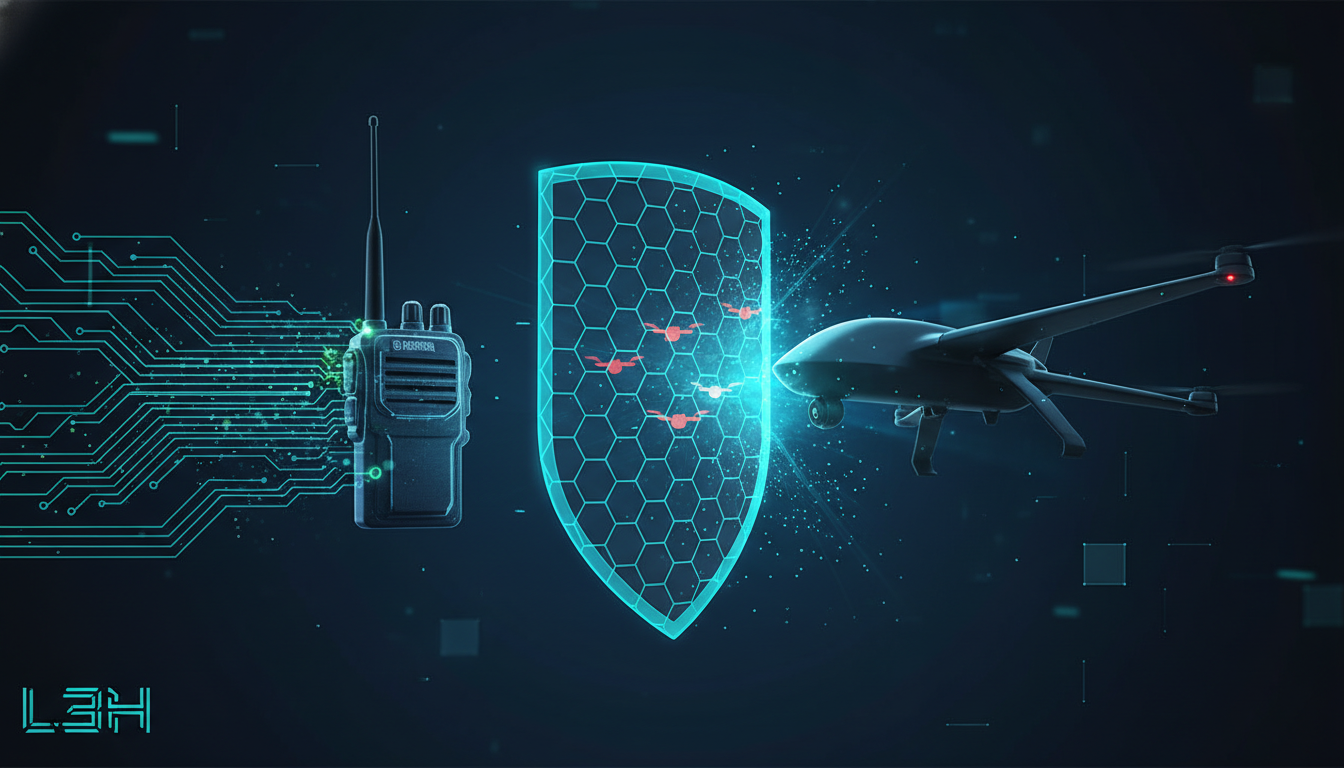
From Radios to Drones: How L3Harris' Wraith Shield is Revolutionizing Military Tech
In the ever-evolving landscape of military technology, the ability to adapt and innovate is paramount. L3Harris Technologies, a leader in defense electronics, has introduced a groundbreaking advancement that exemplifies this ability. Their latest innovation, the Wraith Shield, represents a significant leap forward in counter-drone technology, transforming existing tactical radios into sophisticated, AI-powered counter-drone sensors.
Addressing the Drone Warfare Challenge
The advent of drone warfare has introduced new challenges for military strategies worldwide. Drones, ranging from high-tech military models to inexpensive commercial variants, can be weaponized and deployed for a variety of missions. This presents a dilemma: deploying high-cost defensive measures against low-cost drones is neither financially sustainable nor operationally efficient. Traditional air defense systems are often ill-equipped to manage the sheer volume and diversity of drone threats, creating the need for a more versatile and economically viable solution.
Wraith Shield addresses this challenge head-on. By leveraging software rather than hardware, L3Harris can upgrade over 100,000 existing tactical radios to detect, classify, and neutralize drone threats without adding new equipment to soldiers' gear. This approach not only enhances operational capability but also provides a cost-effective solution to the increasingly complex problem of drone warfare.
The Mechanics Behind Wraith Shield
Wraith Shield is built upon the foundation of the Wraith waveform, a cutting-edge, wideband tactical waveform developed by L3Harris. This technology allows for fast frequency hopping, which is essential in environments subjected to sophisticated electronic warfare. The software upgrade transforms tactical radios into distributed RF sensors, capable of detecting and disrupting small drone threats directly from the field.
The system's first deployment will be on L3Harris's RF-9820S Compact Team Radio, with plans to extend the upgrade to other models like the AN/PRC-158C, AN/PRC-163, and AN/PRC-167. This broad compatibility means that a vast network of tactical radios can be converted into a formidable counter-drone sensor system, offering unprecedented coverage and responsiveness.
The Role of AI and DataShapes
Central to Wraith Shield's functionality is the AI capability provided by DataShapes AI. Their GlobalEdge platform enables real-time electromagnetic spectrum awareness, allowing soldiers to visualize and respond to threats directly at the tactical edge. This edge-native AI approach is crucial, as it eliminates the need for centralized data processing, which can be a liability in combat zones where connectivity is unreliable.
DataShapes AI's contribution ensures that the system not only detects threats but also provides actionable intelligence swiftly, empowering soldiers to make informed decisions on the battlefield. The partnership between L3Harris and DataShapes exemplifies how collaboration can enhance technological solutions, delivering more robust and effective systems to military personnel.
Strategic Implications and Future Prospects
The introduction of Wraith Shield is not just a technological triumph; it is a strategic one. By upgrading existing hardware with new software capabilities, L3Harris sets a precedent for how military technology can evolve without the need for entirely new systems. This software-defined approach is becoming increasingly common across industries, from automotive to medical devices, where existing infrastructure is enhanced through software advancements.
Moreover, the success of Wraith Shield could influence the broader counter-UAS market. Competitors may follow suit, developing similar software-defined solutions to enhance their offerings. The rapid deployment and international rollout of Wraith Shield will be critical to its success, particularly as allied nations seek to bolster their defense capabilities in light of recent conflicts.
Conclusion
As military technology continues to advance, innovations like L3Harris's Wraith Shield highlight the importance of adaptive strategies and collaborative efforts. By transforming existing tactical radios into powerful counter-drone tools, Wraith Shield not only addresses current security challenges but also sets a new standard for future developments in defense technology.
The implications extend beyond the battlefield; they offer insights into how industries can leverage existing assets to deliver enhanced capabilities and efficiencies. In doing so, they ensure that forces are better prepared to face the dynamic challenges of modern warfare. As L3Harris continues to innovate, the Wraith Shield stands as a testament to the power of software-driven solutions in reshaping the future of defense.
Saksham Gupta
Founder & CEOSaksham Gupta is the Co-Founder and Technology lead at Edubild. With extensive experience in enterprise AI, LLM systems, and B2B integration, he writes about the practical side of building AI products that work in production. Connect with him on LinkedIn for more insights on AI engineering and enterprise technology.