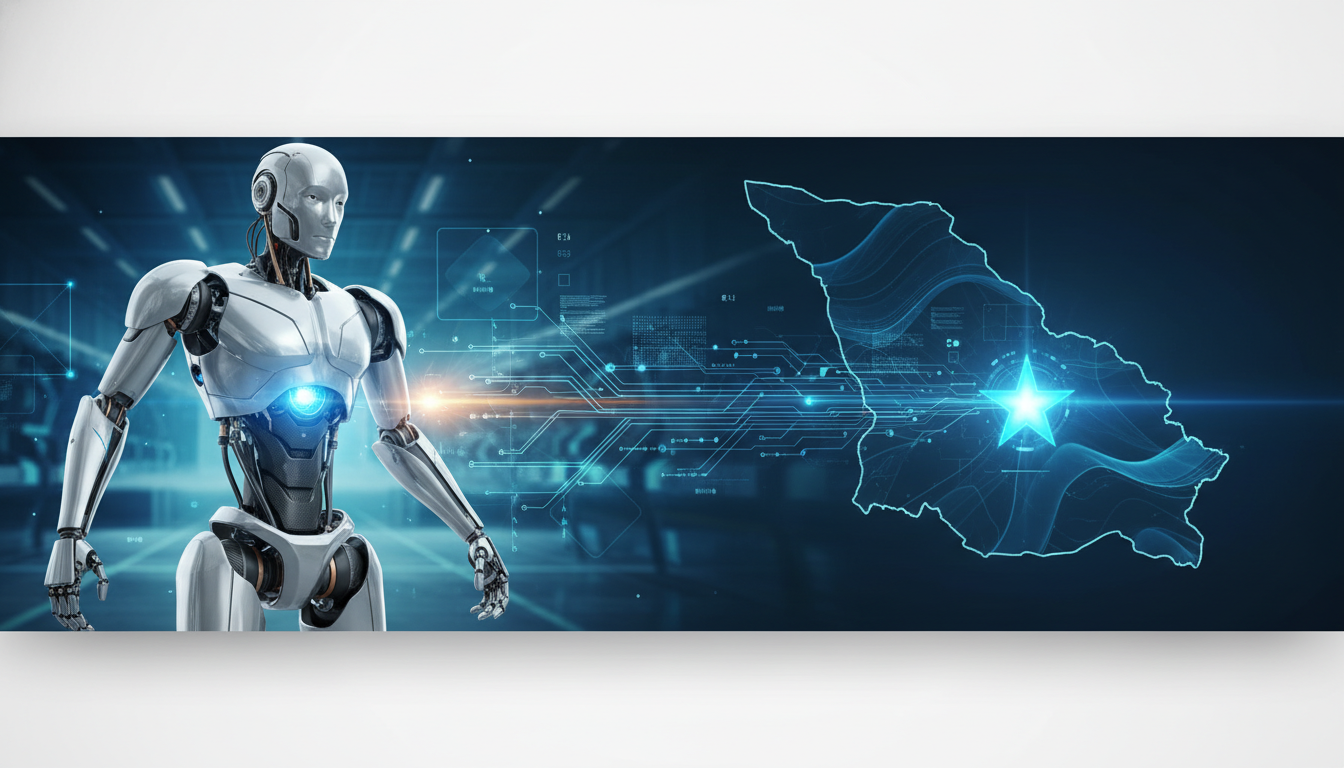
Hyundai's Game-Changing Move: Mass Production of Atlas Robots in Georgia
In a bold and transformative move, Hyundai Motor Group has announced plans to accelerate the mass production of the Atlas robot, a humanoid robot developed by Boston Dynamics, for extensive use across various manufacturing sites. The Hyundai Motor Group Metaplant America (HMGMA) in Georgia has been identified as the primary candidate for this groundbreaking initiative. This strategic decision is poised to revolutionize the manufacturing landscape, emphasizing Hyundai's commitment to integrating advanced robotics and AI-driven systems in its operations.
Pioneering Robotics in Manufacturing
Hyundai's decision to mass-produce the Atlas robot marks a significant leap forward in the field of robotics and manufacturing. The Atlas robot is renowned for its human-like agility and ability to perform complex tasks, making it an ideal candidate for enhancing productivity and efficiency in manufacturing environments. By deploying these robots across its facilities, Hyundai aims to create a more adaptable and responsive manufacturing process, capable of meeting the demands of a rapidly evolving market.
Why Georgia?
The choice of Georgia as the hub for Atlas robot production is strategic. The state provides several advantages, including proximity to Hyundai's existing manufacturing infrastructure and a favorable business climate that supports technological innovation. The HMGMA facility in Georgia is already operating as a smart factory, equipped with advanced technology that seamlessly integrates with the capabilities of the Atlas robot. This synergy allows for immediate deployment and testing of newly produced robots, accelerating the learning curve and operational efficiency.
Establishing a Robust Robotics Supply Chain
To support the mass production of Atlas robots, Hyundai is laying the groundwork for a dedicated robotics supply chain. This involves setting up a Robotics Parts Procurement Office, tasked with overseeing the sourcing and pricing of essential components such as actuators, grippers, and head modules. Hyundai Mobis, a key affiliate of Hyundai Motor Group, has been tapped to manufacture these components, leveraging global sourcing networks to ensure a stable supply and competitive costs.
The establishment of a U.S.-based actuator production facility is also under consideration, with a potential production capacity of 350,000 units annually. This move is expected to fortify Hyundai's supply chain resilience, allowing for greater control over component quality and availability.
Enhancing AI-Driven Manufacturing Systems
In tandem with the production of Atlas robots, Hyundai is also focused on enhancing its AI-driven manufacturing systems. The creation of a new Software Defined Factory (SDF) division underscores this commitment. Led by Alpesh Patel, a seasoned expert in digital manufacturing systems, the SDF division is tasked with overseeing the integration of AI technologies into Hyundai's manufacturing processes. This includes managing digital twin operations, production data management, and the deployment of AI-driven factory systems.
These advancements are expected to streamline manufacturing operations, reduce downtime, and improve overall productivity. By harnessing the power of AI, Hyundai aims to create a more intelligent and responsive manufacturing ecosystem that can adapt to changing market conditions and customer demands.
The Future of Manufacturing
Hyundai's initiative to mass-produce the Atlas robot is a testament to the company's forward-thinking approach and commitment to innovation. By integrating advanced robotics and AI technologies into its manufacturing processes, Hyundai is setting new standards for the industry. The deployment of Atlas robots in manufacturing facilities is expected to enhance operational efficiency, reduce costs, and improve product quality.
Moreover, this move highlights Hyundai's vision for the future of manufacturing—a future where human and robotic collaboration is seamless, and AI-driven systems enable more responsive and sustainable production processes.
Conclusion
As Hyundai embarks on this ambitious journey, the eyes of the manufacturing world are on Georgia, where the mass production of Atlas robots is set to begin. This bold move not only positions Hyundai as a leader in robotics and AI-driven manufacturing but also sets the stage for a new era of innovation in the industry. With the integration of cutting-edge technology and strategic planning, Hyundai is poised to redefine the manufacturing landscape, paving the way for a more efficient and sustainable future.
Saksham Gupta
Founder & CEOSaksham Gupta is the Co-Founder and Technology lead at Edubild. With extensive experience in enterprise AI, LLM systems, and B2B integration, he writes about the practical side of building AI products that work in production. Connect with him on LinkedIn for more insights on AI engineering and enterprise technology.