Level Up: How AI is Revolutionizing Video Game Development
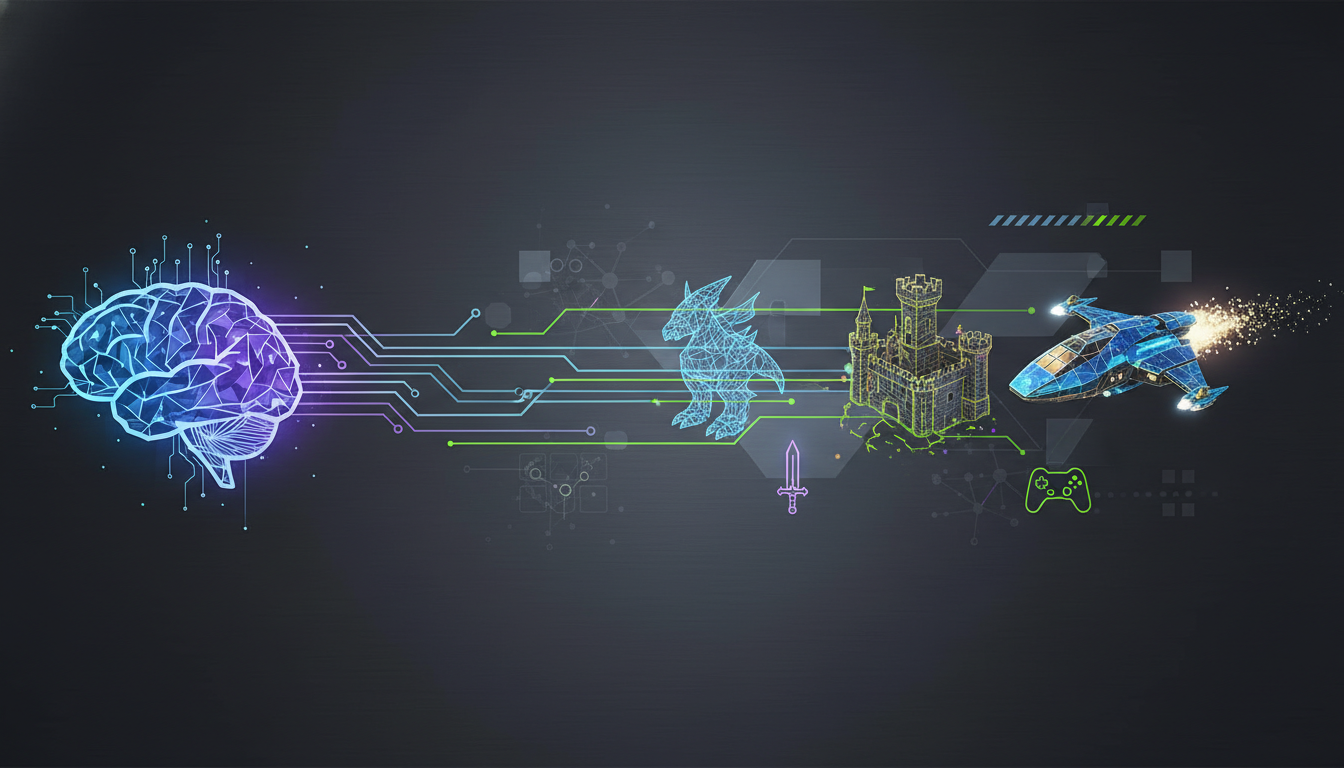
The landscape of video game development is experiencing a seismic shift, driven by the integration of artificial intelligence (AI) technologies. From enhancing non-player characters (NPCs) to streamlining asset creation, AI is not just an experimental tool but a transformative force reshaping every facet of the industry. Let's delve into the specific areas where AI is making waves, making game development faster, more creative, and ultimately, more engaging for players.
Smarter NPCs and Adaptive Gameplay
The days of rigid NPC behavior governed by basic scripted decision trees are fading into the past. AI has breathed new life into these characters, allowing them to exhibit more realistic behaviors and interactions. For instance, Ubisoft's Ghostwriter tool uses generative AI to craft initial NPC dialogue, liberating writers to focus on storytelling rather than sheer volume. Moreover, advanced AI systems enable NPCs to retain memory during gaming sessions, responding to players' actions in nuanced ways. This evolution extends to adaptive gameplay, where AI algorithms monitor player performance in real-time to adjust difficulty levels dynamically, ensuring that each gaming experience is unique and tailored to individual players.
Generative AI and Asset Creation
AI is also revolutionizing the way visual and audio assets are created. The laborious process of concept art generation has been condensed from weeks to mere hours, thanks to AI tools. Tencent's Hunyuan3D-PolyGen exemplifies this by producing game-ready 3D assets with remarkable efficiency gains. On the audio front, tools like ElevenLabs are speeding up voice generation and localization, outpacing traditional recording methods. This swift production not only enhances creativity but also drastically reduces the time and resources required to bring a game to life.
Quality Assurance and Playtesting
Quality assurance (QA) is another area where AI is proving invaluable. Game developers are increasingly employing AI-driven reinforcement learning agents to autonomously test games, uncovering edge-case bugs across a multitude of gameplay styles that would be impossible for human testers alone to identify. Companies like Square Enix are planning to automate a significant portion of their QA processes using generative AI, blending AI capabilities with human oversight to handle judgment-driven issues that machines cannot yet resolve.
Procedural Generation and Living Worlds
Procedural generation has been around for some time, but AI is taking it to new heights by ensuring that the content generated is contextually relevant and cohesive. AI-driven narrative engines are now capable of crafting branching subplots that react to player actions and emotional cues, creating a unique narrative arc for each player. This adaptability eliminates the need for labor-intensive hand-authoring, allowing developers to offer rich, dynamic worlds that evolve with the player’s journey.
AI for Browser and Web Game Development
For developers working on simpler web-based games, AI provides a significant leg-up. Generative AI can quickly handle concept art and asset creation, while AI-assisted code generation helps less-experienced developers bring functional prototypes to life in a browser environment. Platforms like FRVR AI enable users to generate playable browser games from mere text descriptions, democratizing game development and making it accessible to a broader audience. This ease of development is complemented by distribution platforms like Poki, which offer a straightforward path from prototype to published title.
The Limits and Labor Questions
Despite its advantages, the rise of AI in game development has not been without its challenges. The influx of low-quality AI-generated games on platforms like Steam raises questions about maintaining quality standards in an era where content is cheap and easy to produce. Additionally, there are ongoing discussions among voice actor unions and writers' guilds regarding the ethical use of AI in dialogue creation and voice cloning. These negotiations will significantly influence how studios integrate AI into character-driven projects.
In conclusion, AI is undeniably revolutionizing video game development, offering tools that streamline production and enhance creativity. While challenges remain, particularly around quality and labor ethics, the potential benefits of AI—such as reducing bottlenecks and enabling more personalized gaming experiences—are too significant to ignore. As the industry continues to adapt, AI's role is set to expand, promising an exciting future for both developers and players alike.
Saksham Gupta
Founder & CEOSaksham Gupta is the Co-Founder and Technology lead at Edubild. With extensive experience in enterprise AI, LLM systems, and B2B integration, he writes about the practical side of building AI products that work in production. Connect with him on LinkedIn for more insights on AI engineering and enterprise technology.