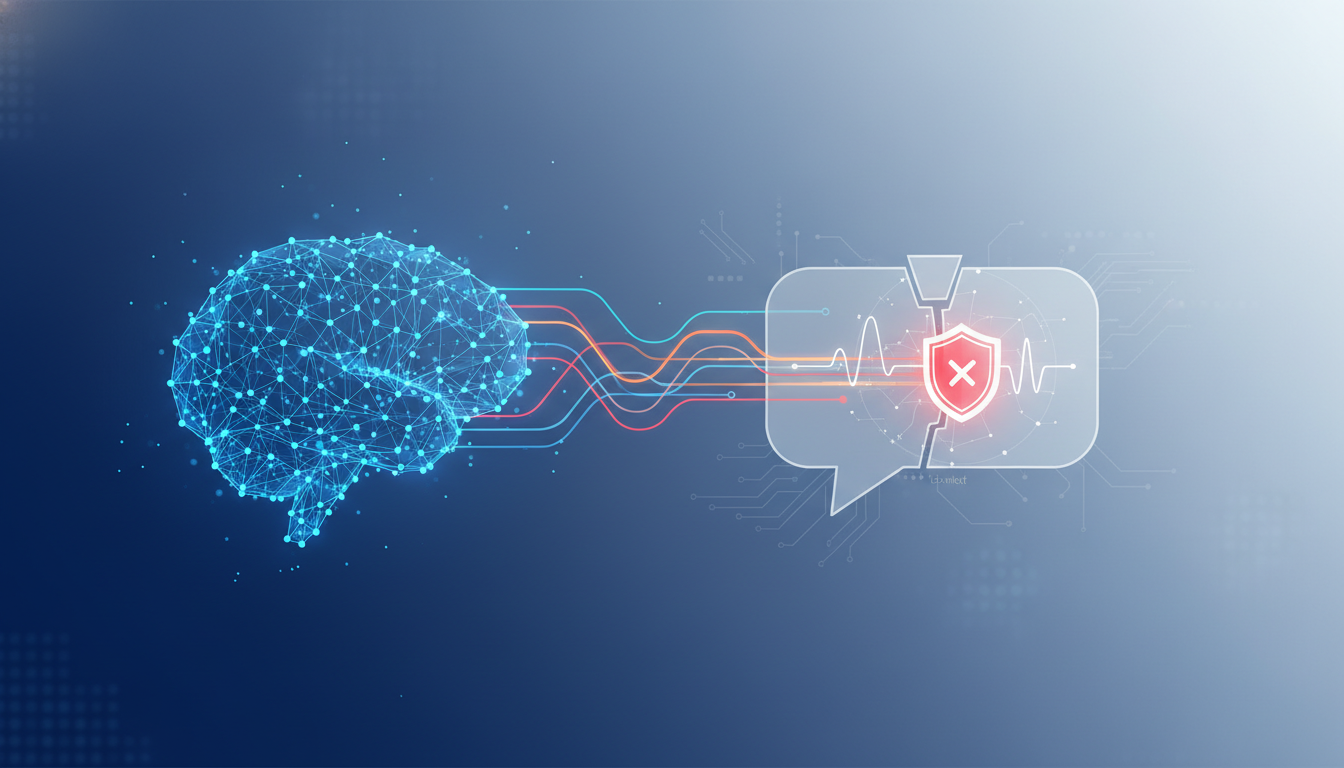
Navigating Sensitivity: How AI Learns to Detect Contextual Risk in Conversations
Artificial intelligence, particularly in the realm of conversational agents like ChatGPT, has become an integral part of our daily lives. From answering mundane questions to engaging in complex dialogues, these systems are designed to assist users across various contexts. However, an often overlooked aspect of AI interactions is the ability to detect and respond to sensitive situations that may emerge during conversations.
The Importance of Context in Sensitive Interactions
In dialogues where sensitivity is key, context is paramount. A seemingly innocuous request can take on a different meaning when paired with prior indications of distress or harmful intent. Recognizing this, AI developers have been working tirelessly to enhance systems like ChatGPT to grasp the nuances of such interactions. The primary aim is to ensure that the AI can differentiate between routine exchanges and those that require a more cautious approach.
These improvements are crucial in scenarios where users might be experiencing distress or contemplating self-harm. By identifying cues that indicate a potential risk, the AI can alter its response strategy to provide the necessary support, such as offering crisis resources or suggesting contact with trusted individuals.
Enhancing AI Safety Mechanisms
The journey towards a safer AI is a multifaceted endeavor. It involves upgrading model policies, refining training protocols, and collaborating with mental health experts to better understand and respond to high-risk situations. Recent updates have enabled ChatGPT to recognize patterns of possible harmful intent and respond with increased caution.
One key development is the implementation of a "safe completion approach," which is designed to refuse requests that could lead to unsafe outcomes. For instance, if a user hints at self-harm, the AI is programmed to de-escalate the conversation and guide the user toward safer alternatives. This approach is not only about refusing harmful details but also about ensuring that the AI remains helpful in less critical situations.
Creating Safety Summaries
To further bolster safety, new systems have been developed to create "safety summaries." These are concise notes that capture essential context from previous interactions, which might be critical in high-risk scenarios. The goal is to provide the AI with a broader understanding of ongoing conversations without infringing on user privacy or personalization.
These summaries are specifically designed to be short-lived and are only utilized when a serious safety concern is detected. The information is factual and narrowly scoped, ensuring that it is relevant to the current situation without affecting the AI's general performance in everyday interactions.
Collaboration with Mental Health Experts
The development of these advanced safety features has been significantly informed by the expertise of mental health professionals. By working with psychiatrists and psychologists, AI developers have grounded their improvements in real-world knowledge, ensuring that the AI's responses are both appropriate and supportive in sensitive situations.
These experts have provided invaluable insights into when safety summaries should be generated and how much prior context should be considered. Their contributions ensure that the AI's response is not only technically sound but also empathetic and compassionate.
Measuring Success and Looking Forward
The effectiveness of these updates is measured through rigorous internal evaluations designed to test the AI's performance in challenging scenarios. The results have been promising, with significant improvements in the AI's ability to provide safe responses, especially in cases related to self-harm and harm to others.
For instance, the safe-response performance has seen a 50% improvement in scenarios involving suicide and self-harm. This indicates that the AI is now more adept at recognizing when earlier parts of a conversation change the meaning of a subsequent request, allowing it to respond appropriately.
As AI technologies continue to evolve, the focus remains on enhancing their ability to identify and address risks that may not be immediately apparent. Future efforts may expand to other high-risk areas, such as cyber safety or biological threats, always with the necessary safeguards in place.
In conclusion, the journey toward a safer AI is ongoing, requiring constant refinement and adaptation. By leveraging the expertise of mental health professionals and continuously evaluating AI performance, developers are making strides in ensuring that systems like ChatGPT can navigate sensitive conversations with the care and caution they deserve.
Saksham Gupta
Founder & CEOSaksham Gupta is the Co-Founder and Technology lead at Edubild. With extensive experience in enterprise AI, LLM systems, and B2B integration, he writes about the practical side of building AI products that work in production. Connect with him on LinkedIn for more insights on AI engineering and enterprise technology.