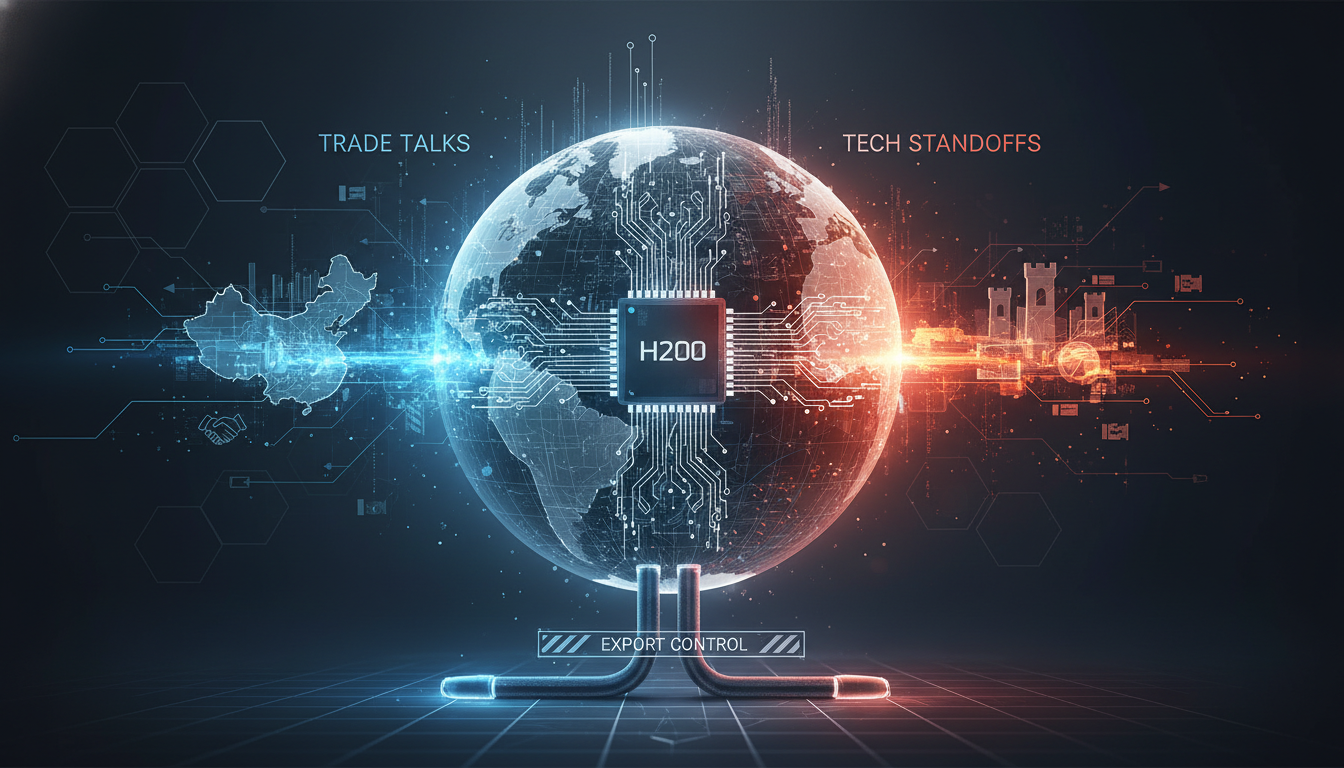
Nvidia's H200 Chip Conundrum: Trade Talks & Tech Standoffs in a Global Landscape
The emergence of Nvidia's H200 chip as a focal point in global trade talks underscores the increasingly complex intersection of technology, international diplomacy, and national security. The recent developments surrounding the chip’s export to China highlight broader themes of geopolitical maneuvering and industrial strategy, with both the United States and China playing pivotal roles in shaping the landscape.
A Diplomatic Dance
At the heart of the current stalemate is a diplomatic dance involving key players from both nations. When President Trump visited Beijing, accompanied by Nvidia's CEO Jensen Huang, there was a cautious optimism about the potential for progress in chip exports. However, the outcome revealed more about the intricacies of international relations than any tangible advancement. Despite existing US export licenses permitting Chinese firms like Alibaba and Tencent to receive up to 75,000 units each, the chips remain in limbo due to Beijing's strategic directives.
The Paradox of Policy
The core of the impasse lies in the contradictory frameworks imposed by both governments. The United States allows the export of H200 chips to China, but mandates their use solely within Chinese borders. Conversely, Chinese authorities have instructed their tech giants to leverage Nvidia chips for overseas operations, thereby supporting domestic semiconductor development. This divergence creates a paradox where chips cannot simultaneously satisfy both conditions, effectively stalling the trade of H200 units.
Commerce Secretary Howard Lutnick's recent comments underscore China's resolve to bolster its domestic technology sector, particularly through companies like Huawei. This strategic shift is part of a broader policy to reduce dependency on US technology, a stance mirrored in Beijing's supply-chain security review.
Huawei's Strategic Advantage
Amidst the diplomatic wrangling, Chinese tech firms have not remained idle. Huawei, in particular, has seized the opportunity to advance its processor technology. The launch of DeepSeek V4, optimized for Huawei's Ascend chips, marks a significant milestone in China's quest for technological self-reliance. The model's success in training workloads signifies a shift from experimental to operational, with tangible implications for the broader AI ecosystem.
Tencent and Alibaba's strides in GPU supply and proprietary chip production further reflect China's commitment to nurturing a self-sufficient tech ecosystem. These developments signal a potential realignment in the global AI hardware market, with Chinese companies increasingly favoring homegrown solutions over foreign imports.
The Implications for Nvidia and the AI Industry
For Nvidia, the current situation poses both challenges and opportunities. The company's China revenue, once a substantial portion of its portfolio, has dwindled significantly, forcing it to recalibrate its market strategy. CEO Jensen Huang's involvement in diplomatic efforts underscores the high stakes involved, but also highlights the limitations of corporate diplomacy in overcoming structural barriers.
The broader AI industry is closely watching these developments, as the outcome will influence the competitive dynamics in one of the world's largest AI markets. The shift toward Huawei's compute stack, driven by government directives rather than technical superiority, raises questions about the future of AI hardware architecture in China and beyond.
Looking Ahead
As the situation unfolds, the H200 chip conundrum serves as a microcosm of larger trends in global technology and trade. The interplay between national security, economic strategy, and technological innovation will continue to shape the landscape, with potential ripple effects across industries and borders. For stakeholders in the AI sector, staying informed and adaptable will be crucial in navigating this evolving terrain.
In conclusion, while the immediate outlook for Nvidia's H200 chip in China remains uncertain, the broader narrative of tech-driven geopolitics is poised to define the next chapter in global trade and innovation. As both nations pursue their strategic objectives, the world will keenly observe how these dynamics unfold and what they mean for the future of technology and international relations.
Saksham Gupta
Founder & CEOSaksham Gupta is the Co-Founder and Technology lead at Edubild. With extensive experience in enterprise AI, LLM systems, and B2B integration, he writes about the practical side of building AI products that work in production. Connect with him on LinkedIn for more insights on AI engineering and enterprise technology.