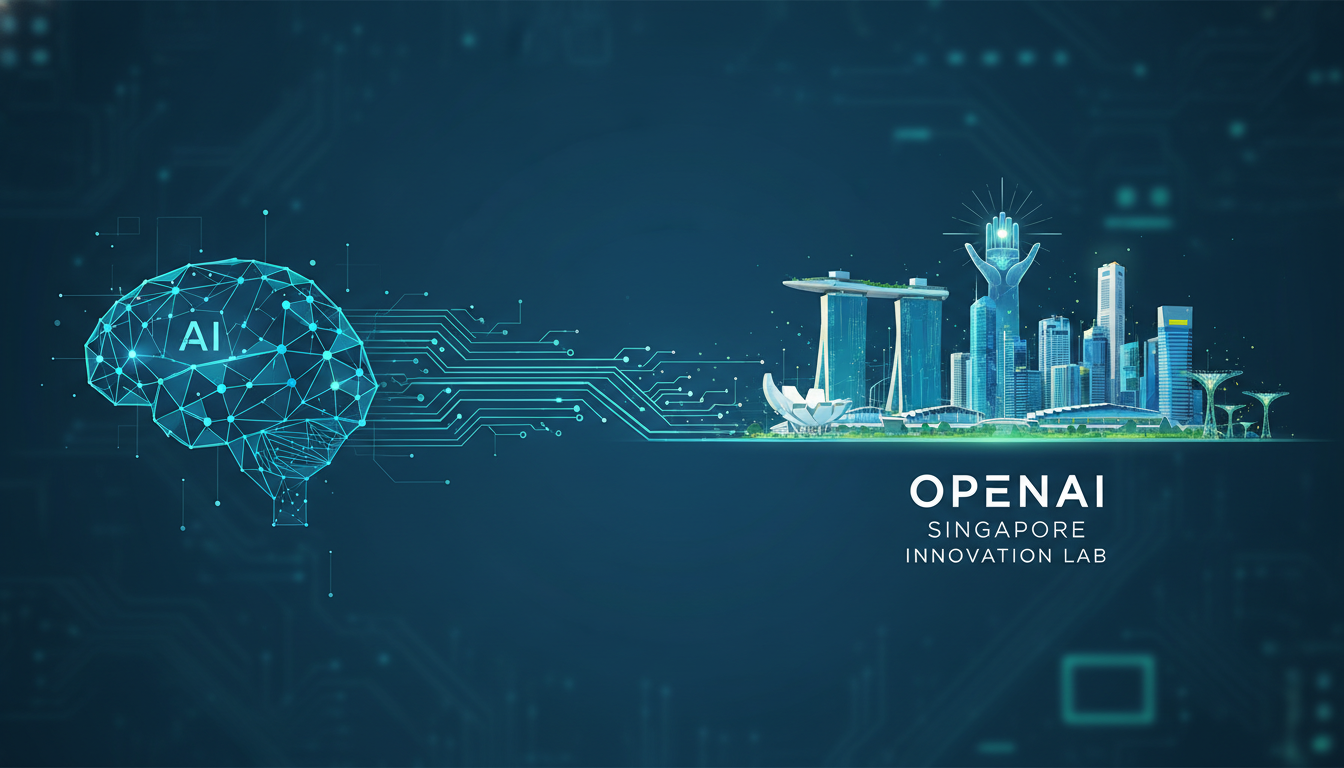
OpenAI Expands Horizons: Launching AI Lab in Singapore to Boost Local Innovation
In a strategic move to enhance its global presence, OpenAI has announced the launch of its first Applied AI Lab outside the United States, setting its sights on Singapore. This initiative, dubbed "OpenAI for Singapore," is a collaborative venture with the Ministry of Digital Development and Information and was unveiled at the prestigious ATx Summit. With a robust investment commitment exceeding S$300 million, this development signifies a new chapter in Singapore's journey to becoming a leading hub for artificial intelligence innovation.
Strengthening AI Deployment and Talent Development
The establishment of the AI Lab in Singapore is poised to create over 200 technical roles locally in the coming years. This initiative aligns with Singapore’s strategic priorities around AI, focusing on public service, finance, and digital infrastructure. By anchoring its efforts in these critical areas, OpenAI aims to collaborate with various organizations to advance the deployment of AI technologies.
In partnership with government agencies and local educational institutions, OpenAI plans to launch several educational and workforce development programs. These initiatives include the introduction of a Singapore chapter of the OpenAI Academy, participation in the National AI Impact Programme, and hosting Codex for Teachers hackathons. Such efforts are designed to equip educators and students with the necessary skills to thrive in an AI-dominated landscape.
Collaborative Efforts with Local Partners
OpenAI’s venture in Singapore is not limited to educational endeavors. The company is also set to work with local partners to facilitate accelerator programs catering to AI-native startups. These programs will offer workshops for micro-entrepreneurs and small businesses, focusing on integrating AI into operational processes and customer service. By doing so, OpenAI aims to empower small and medium-sized enterprises (SMEs) to harness the power of AI, thereby fostering a vibrant ecosystem of innovation.
Chng Kai Fong, Permanent Secretary for Digital Development and Information, emphasized that Singapore’s approach to AI involves cultivating new sectors, anchoring global frontier companies, and equipping the workforce with relevant skills. The partnership with OpenAI is a testament to these objectives, promising significant advancements in the AI landscape of the region.
Updates to Singapore’s Agentic AI Framework
Alongside the establishment of the AI Lab, Singapore has taken strides to update its governance framework for agentic AI. Originally launched by the Infocomm Media Development Authority (IMDA) at the World Economic Forum in January 2026, the framework has been revised to incorporate feedback from over 60 organizations, including giants like AWS, DBS, Google, and Salesforce.
The updated framework provides comprehensive guidance on managing the risks associated with multi-agent systems, third-party agents, automation bias, and human accountability. It also includes more than ten case studies illustrating practical applications of these recommendations. These case studies, contributed by both local and international organizations, showcase the diverse approaches to implementing robust governance controls in AI deployment.
Case Studies Demonstrating Governance Controls
One notable case study involves Dayos, a Singapore-based enterprise AI automation company. Dayos developed an AI-powered ticketing agent to handle internal IT requests with varying risk levels. This agent automates low-risk actions like password resets while requiring human approval for moderate-risk actions, ensuring a balanced approach to automation.
Another significant contribution comes from Tencent, which shared insights on CodeBuddy, an agentic AI coding system. CodeBuddy is designed to plan, write, and deploy code through natural language instructions, with human approval required for critical actions. This system exemplifies how companies can maintain control over AI systems while leveraging their capabilities.
GovTech Singapore also provided a case study detailing the rollout of agentic coding assistants in government operations. This initiative highlights the importance of risk management and security protocols when integrating AI into sensitive environments.
Conclusion
The launch of the OpenAI Lab in Singapore marks a significant milestone in OpenAI's global strategy, reinforcing its commitment to fostering AI innovation and talent development. By partnering with local entities and updating its AI governance framework, Singapore is positioning itself as a leader in responsible AI deployment and development. This collaboration not only promises to enhance the technological landscape of Singapore but also sets a precedent for future international partnerships in the field of artificial intelligence. As AI continues to evolve, such initiatives will be crucial in driving sustainable growth and innovation across the globe.
Saksham Gupta
Founder & CEOSaksham Gupta is the Co-Founder and Technology lead at Edubild. With extensive experience in enterprise AI, LLM systems, and B2B integration, he writes about the practical side of building AI products that work in production. Connect with him on LinkedIn for more insights on AI engineering and enterprise technology.