Revolutionizing Computing: Microsoft's Majorana 2 Quantum Chip and Agentic AI
In the ever-evolving landscape of technology, quantum computing stands as a beacon of transformative potential. Microsoft's recent unveiling of the Majorana 2 quantum chip marks a significant milestone in this journey. Not only does it promise to redefine the boundaries of computational power, but it also sets the stage for the development of agentic AI, a leap forward in artificial intelligence that could revolutionize research and development.
The Majorana 2 Quantum Chip: A Leap in Reliability
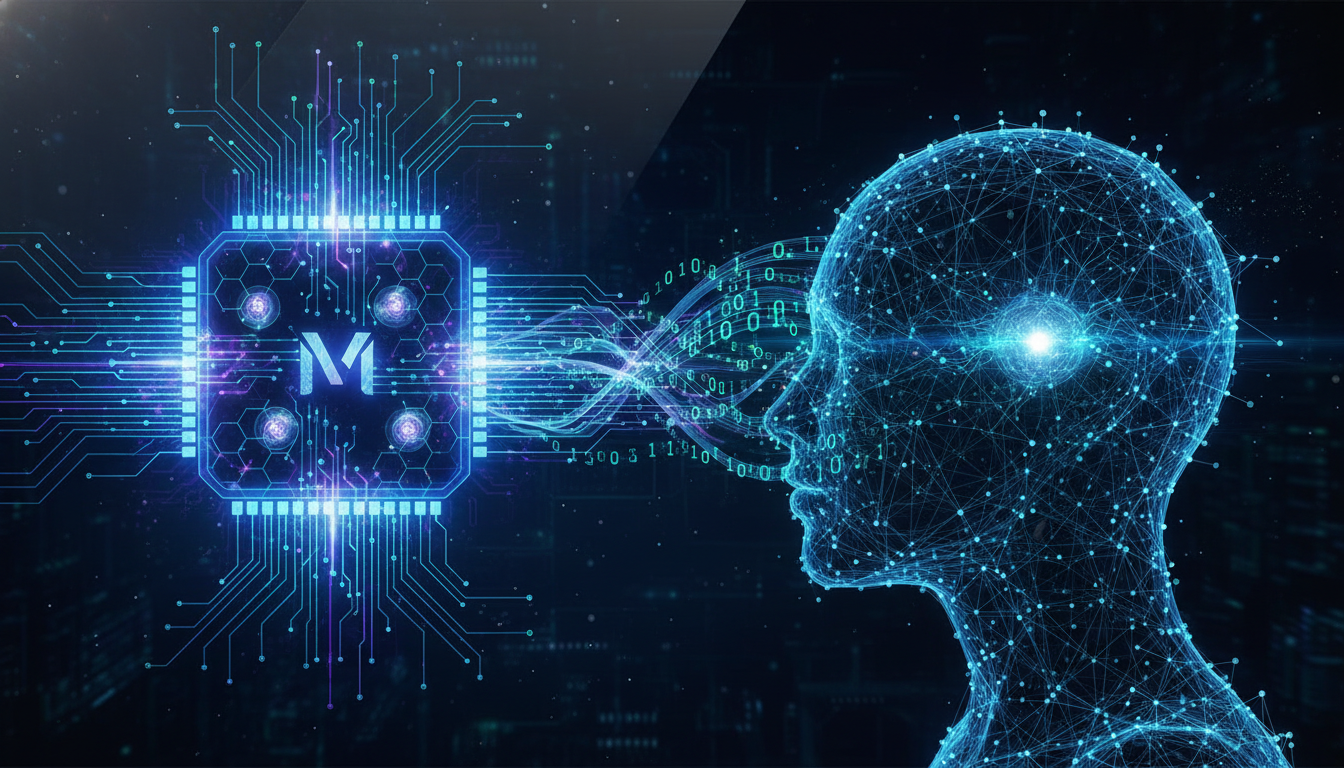
At the heart of this breakthrough is the Majorana 2 quantum chip, which boasts a 1,000-fold increase in qubit reliability compared to its predecessors. In a field where quantum states are notoriously fragile, this improvement is akin to extending the life of a phone battery from a single day to nearly three years. This leap is primarily attributed to a critical material switch from aluminum to lead, a decision rooted in years of meticulous material research rather than a direct AI suggestion.
The Majorana 2 chip's ability to maintain its computational state for up to a minute, as opposed to the industry standard of microseconds, symbolizes a pivotal advancement. Such reliability is essential for realizing the full potential of quantum computing, promising to bring commercially scalable quantum computers closer to reality by 2029.
Microsoft Discovery: Agentic AI in Action
The narrative of the Majorana 2 chip is incomplete without acknowledging Microsoft Discovery, the agentic AI platform that played a crucial role in its development. While the chip's design was not directly driven by AI, Microsoft Discovery facilitated critical processes that enabled the rapid progression of this project.
This platform excels in managing complex workflows, automating measurements, and synthesizing vast amounts of research data. By doing so, it uncovers correlations and insights that would otherwise remain obscured to human researchers. Zulfi Alam, Microsoft's corporate vice president for quantum, highlights how AI agents can resynthesize data and surface probable targets, reducing the need for exhaustive experimentation.
Automating the Measurement Problem
One of the significant hurdles in quantum computing is qubit measurement, a process that traditionally spans weeks and involves determining the quantum states on semiconductor wires. Previous attempts at automation using machine learning had limited success. However, Microsoft Discovery's agentic AI has transformed this landscape by automating measurements through the creation of three-dimensional qubit condition maps.
This advancement allows parallel adjustments in hundreds of parameters simultaneously, a feat beyond the capabilities of human researchers. Such automation accelerates the research process, reducing timelines and increasing the accuracy of quantum experiments.
Enterprise Adoption and Future Prospects
With the success of the Majorana 2 chip, Microsoft Discovery is now available to enterprise customers, offering specialized AI agents for scientific research and a Discovery Engine for research workflows. This platform is accompanied by enterprise-level security and governance, ensuring its suitability for a wide range of applications.
Microsoft's decision to bring forward its quantum roadmap from 2033 to 2029 underscores the impact of these advancements. While the 1,000x reliability improvement is specific to Microsoft's own qubits, it signifies a substantial step forward in the quest for practical quantum computing.
The Implications for Agentic AI
The integration of agentic AI in the development of the Majorana 2 chip is a testament to the transformative potential of AI in scientific research. By breaking down silos of research data and automating complex processes, AI is not only expediting the pace of innovation but also enabling researchers to focus on higher-level problem-solving.
As agentic AI continues to evolve, its applications are expected to extend beyond quantum computing into various fields, potentially revolutionizing industries from pharmaceuticals to materials science. The synergy between quantum computing and AI promises to unlock new frontiers in computational capabilities, driving forward the next wave of technological advancements.
Conclusion
Microsoft's Majorana 2 quantum chip and the accompanying agentic AI platform, Microsoft Discovery, represent a significant leap in the journey towards practical quantum computing. By enhancing qubit reliability and automating complex processes, this duo exemplifies the power of combining cutting-edge technology with advanced AI capabilities. As the landscape of quantum computing continues to evolve, the integration of agentic AI will undoubtedly play a pivotal role in shaping the future of research and development across industries.
Saksham Gupta
Founder & CEOSaksham Gupta is the Co-Founder and Technology lead at Edubild. With extensive experience in enterprise AI, LLM systems, and B2B integration, he writes about the practical side of building AI products that work in production. Connect with him on LinkedIn for more insights on AI engineering and enterprise technology.