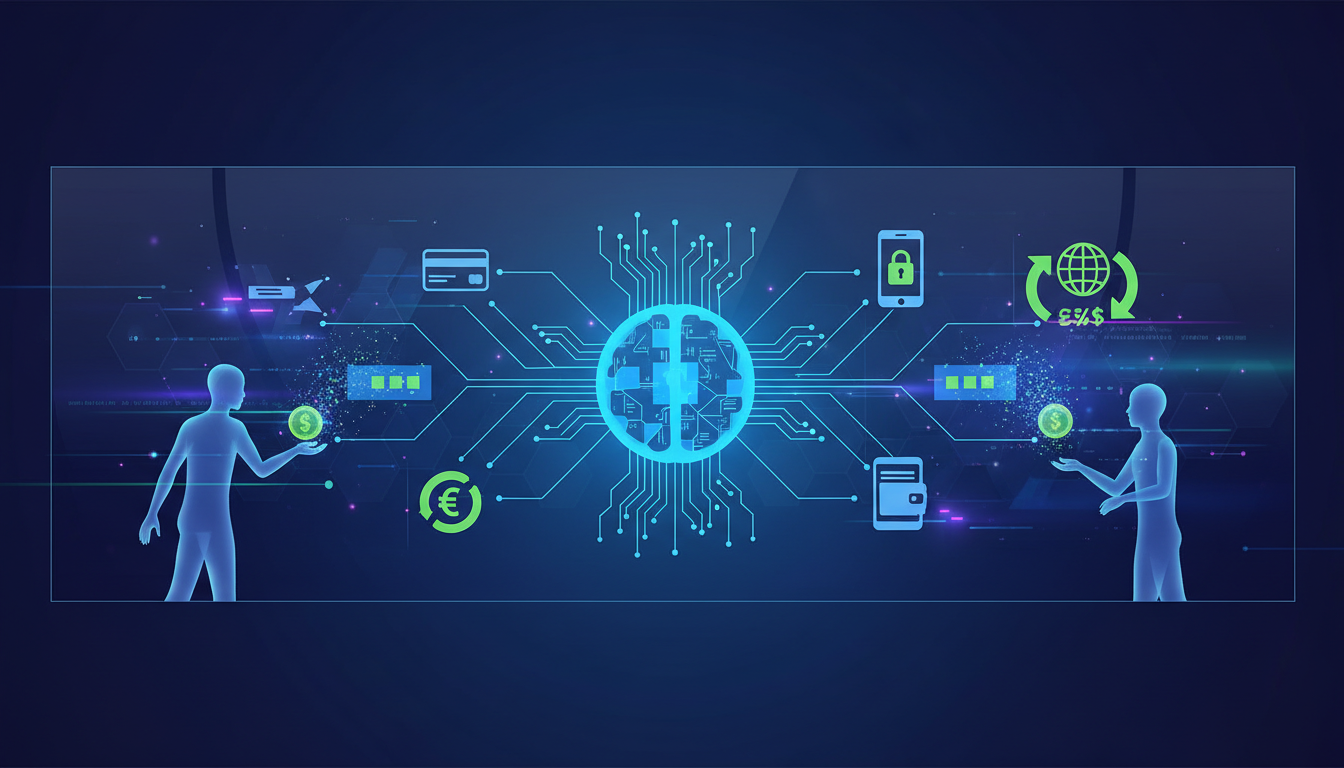
The Future of Payments: How AI Agents Are Revolutionizing Transactions
In the rapidly evolving landscape of financial technology, artificial intelligence (AI) stands as a transformative force poised to redefine the future of payments. Traditional payment systems, entrenched in the necessity for human intervention, are beginning to embrace a new paradigm where AI agents initiate transactions. This shift, led by industry giants like Visa, marks a significant evolution in how payments are conceived and executed.
The Role of AI Agents in Payments
Traditionally, payments have relied on a linear model where a human initiates a transaction, and a bank or card network processes it. However, with advancements in AI, this model is undergoing a fundamental transformation. Visa's pioneering "Agentic Ready" program in Europe exemplifies this shift. By collaborating with major banks such as Commerzbank and DZ Bank, Visa is testing the waters of AI-initiated transactions, aiming to prepare existing financial systems for a scenario where software agents autonomously search, decide, and complete purchases on behalf of users.
These AI agents are designed to act within predefined parameters set by users. For instance, they could manage routine or repeat purchases by monitoring supply levels and comparing prices, executing transactions automatically when certain conditions are met. This model is reminiscent of the early days of online payments, where financial institutions had to adapt to a new type of transaction flow.
Ensuring Security and Compliance
As AI agents take on a more active role in initiating transactions, the question of security and compliance becomes paramount. Banks involved in early trials are rigorously testing how these AI-driven transactions can be integrated into existing systems without breaching compliance regulations. This involves ensuring robust checks related to fraud prevention, maintaining audit trails, and securing customer consent.
A report by RepRisk highlights that banks are increasingly encountering issues linked to AI, resulting in significant financial losses. Thus, any transition to AI-initiated transactions must be meticulously managed to adhere to oversight standards.
Visa’s approach focuses on the infrastructure rather than consumer-facing tools. The company is working on defining how payment networks should behave when the initiator of a transaction is an AI agent. This includes establishing protocols for agent authentication, transaction approval, and dispute resolution.
Streamlining Enterprise Purchasing
Incorporating AI agents into payment systems holds significant promise for enterprise procurement processes. Large organizations, which often involve multiple approval steps for purchases, can benefit from AI agents that handle routine transactions within set limits. This not only reduces manual workload but also necessitates clear guidelines on the extent of autonomy these agents possess to prevent errors or misuse.
As companies invest more in AI to automate back-office functions and reduce costs, there is a parallel need to focus on data and AI strategies. Regulators are closely monitoring AI's role in decision-making, particularly in credit and fraud detection, underscoring the need for rigorous oversight.
The Path Forward
The trajectory of AI in payment systems suggests that transactions could soon become one of the first areas where AI agents operate with greater autonomy. While banks will still need to establish rules and monitor activity, the day-to-day initiation of transactions may require less direct human involvement. Visa’s current focus on testing and system design is a step toward adapting financial infrastructure to accommodate AI agents, which do not hold physical cards but can still execute purchases.
The evolution of AI in the financial sector is not just about enhancing efficiency; it’s about redefining the very nature of transactions. As AI systems take on more responsibilities, the financial infrastructure will need to adapt, ensuring that the benefits of AI are harnessed while maintaining the security and trust that underpin the global financial system.
Conclusion
The integration of AI agents in payment systems marks a significant milestone in the evolution of financial technology. By enabling AI to initiate transactions, companies like Visa are paving the way for a future where payments are not just faster and more efficient, but also more intelligent. As these systems mature, the financial landscape will inevitably shift, requiring ongoing adaptation to balance innovation with security and compliance. The future of payments is here, and it is powered by AI.
Saksham Gupta
Founder & CEOSaksham Gupta is the Co-Founder and Technology lead at Edubild. With extensive experience in enterprise AI, LLM systems, and B2B integration, he writes about the practical side of building AI products that work in production. Connect with him on LinkedIn for more insights on AI engineering and enterprise technology.