The Rise of Anthropic: How Its IPO Signals a New Era for Enterprise AI
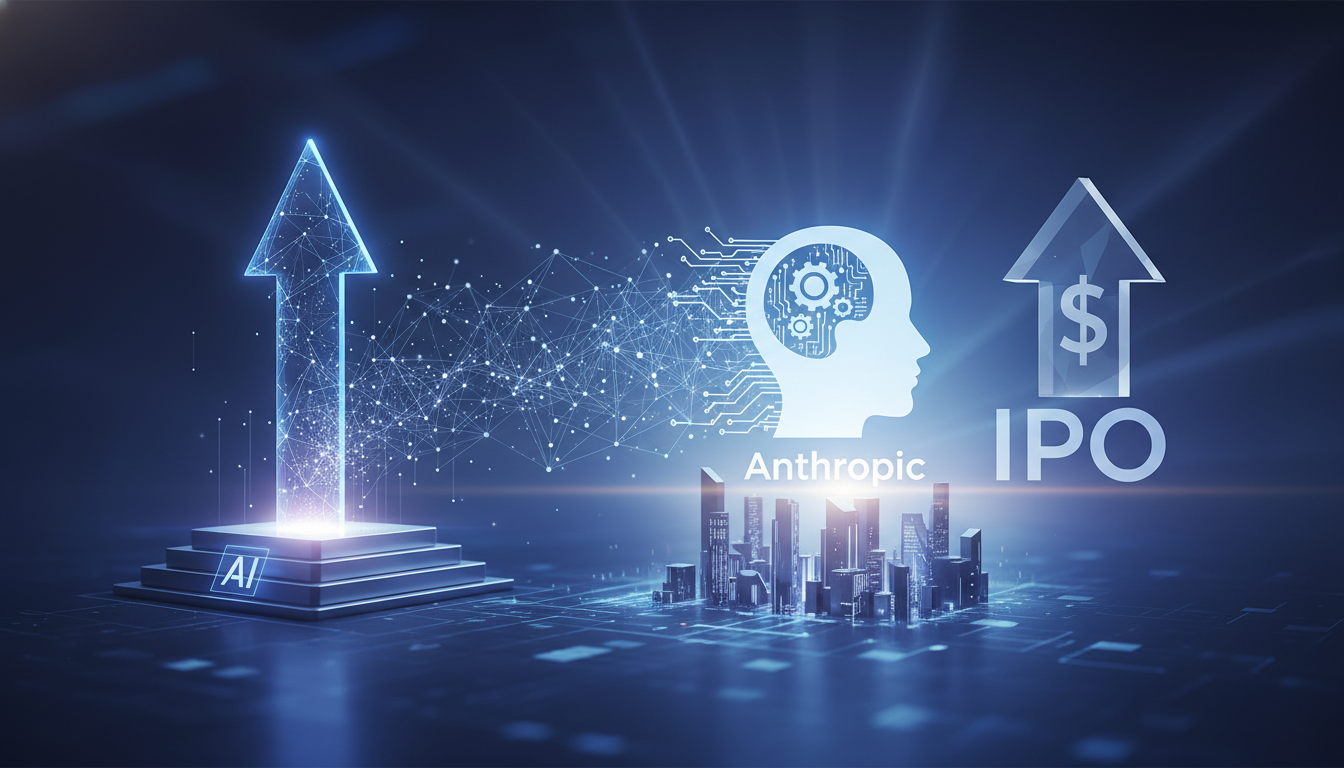
The landscape of artificial intelligence is evolving rapidly, and Anthropic's initial public offering (IPO) is a significant milestone that marks this transformation. As Anthropic prepares to enter public markets, the implications for enterprise AI are profound. This move not only signals the maturity of generative AI technologies but also underscores their growing utility and importance in corporate environments.
From Research to Enterprise Utility
Anthropic's IPO represents a pivotal shift from the research-intensive phase of AI development to its application as a stable and scalable enterprise utility. Historically, AI development focused on rapid iteration and pushing computational limits. However, as AI technologies like Anthropic's Claude become integral to enterprise operations, the need for structured release schedules, predictable pricing, and reliable service agreements becomes paramount.
This transition is crucial for enterprises that plan to integrate AI into their workflows. Public market structures will formalize Anthropic's pricing tiers and service agreements, aligning them with corporate procurement processes. This alignment is necessary for businesses to effectively plan their multi-year AI strategies and investments.
Establishing a Public Valuation Framework
The IPO also sets the stage for establishing a public valuation framework for AI companies. Traditionally, investments in AI have focused on hardware and infrastructure providers. Anthropic's public offering presents a rare opportunity for investors to directly engage with a company at the forefront of developing large-scale generative models.
Pricing such an asset class is complex. The substantial capital required for AI model training and infrastructure demands a careful balance between operational costs and profitability. Public investors will scrutinize Anthropic's ability to manage these costs while delivering favorable quarterly earnings. This scrutiny will likely influence the company's pricing strategies, potentially leading to tighter licensing terms and the deprecation of older model versions as a cost management measure.
The B2B Dependency
Anthropic's commercial success hinges on enterprise adoption. The consumer market alone cannot sustain the company's extensive infrastructure costs. While consumer AI products like Claude have gained some traction, they lack the scale required for significant revenue generation. Instead, Anthropic and its peers must extract revenue from enterprise contracts, integrating AI tools into essential business functions like human resources and customer service.
This dependency on business-to-business (B2B) relationships presents both challenges and opportunities. Enterprises can leverage their negotiating power to secure favorable terms before the pressures of public market demands shift Anthropic's focus toward immediate profitability. This scenario underscores the importance of robust enterprise contracts that offer stability and predictable revenue streams.
Margin Pressures and Market Consolidation
Anthropic's IPO serves as a catalyst for greater commercial discipline across the AI sector. As AI companies transition to public ownership, they must demonstrate sustainable business models and operational efficiency. Failure to meet these criteria could result in aggressive changes to service agreements or even the discontinuation of key API endpoints.
This pressure may lead to market consolidation, with smaller AI providers struggling to compete against larger, publicly funded entities. Enterprises relying on niche AI solutions must prepare for potential disruptions, including vendor bankruptcies or acquisitions. Designing flexible systems capable of integrating diverse AI models can mitigate these risks.
A Test for High-Capital Innovation
Anthropic's journey to the public exchange is a litmus test for how institutional investors value high-capital, resource-intensive technologies. Success in this endeavor could encourage more venture-backed tech companies to explore public markets, ushering in a new era of financial compliance and margin-focused operations.
The implications extend beyond AI, potentially setting a precedent for other technology sectors with similar capital demands. Investors will not only evaluate Anthropic's prospects but also assess the readiness of public markets to support the next wave of technological advancements.
Conclusion
Anthropic's IPO is more than just a financial event; it represents a transformative moment for enterprise AI. As the company navigates the challenges and opportunities of public markets, its journey will shape the future of AI adoption in corporate environments. Enterprises must stay informed and adaptable, leveraging the evolving landscape to harness the full potential of AI technologies. This new era promises both rewards and challenges, requiring businesses to strategically position themselves to thrive in a world increasingly driven by artificial intelligence.
Saksham Gupta
Founder & CEOSaksham Gupta is the Co-Founder and Technology lead at Edubild. With extensive experience in enterprise AI, LLM systems, and B2B integration, he writes about the practical side of building AI products that work in production. Connect with him on LinkedIn for more insights on AI engineering and enterprise technology.