Unlocking the Future: How AI and Edge Computing Redefine Business Security
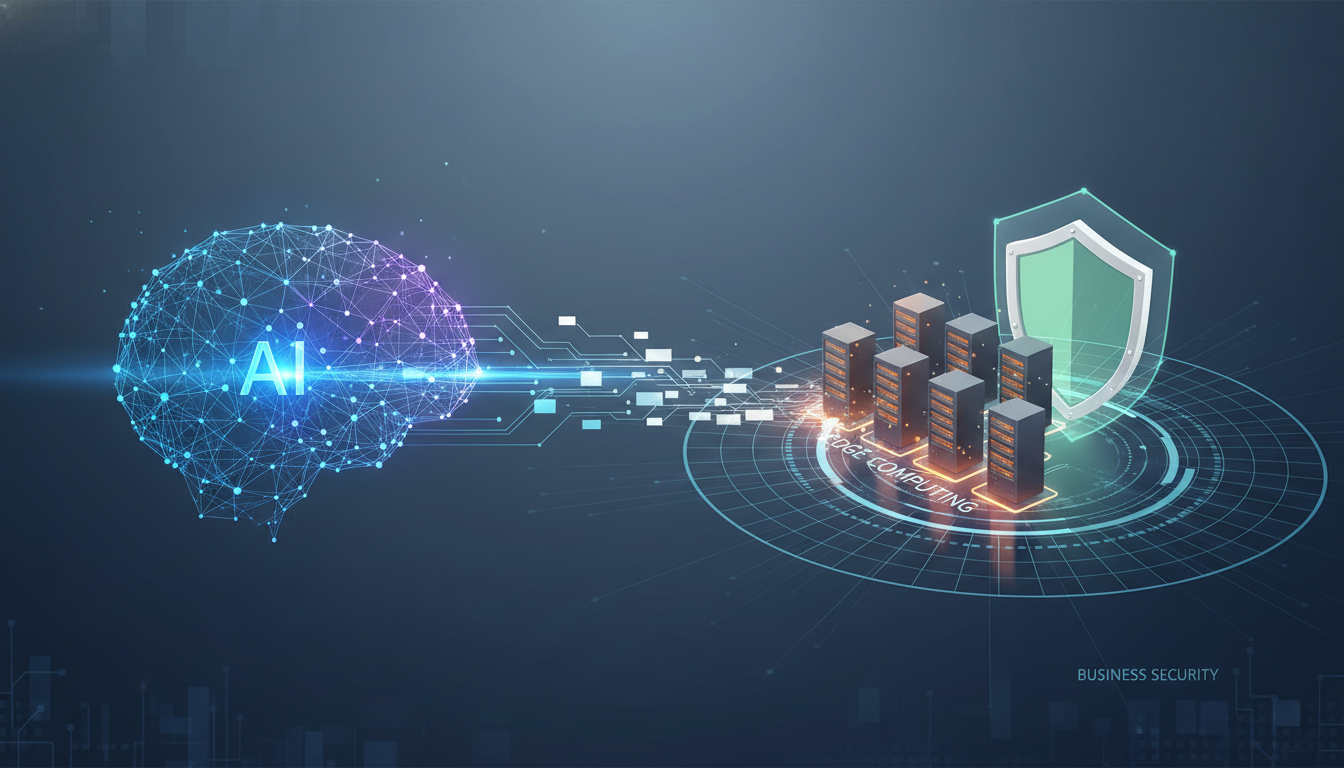
As businesses increasingly rely on digital technologies, the convergence of Artificial Intelligence (AI) and Edge Computing is emerging as a transformative force in redefining business security. This powerful duo promises to not only enhance operational efficiency but also bolster cybersecurity measures, creating a more resilient digital infrastructure. Understanding how these technologies integrate and complement each other can provide enterprises with a competitive edge in today's fast-paced digital economy.
The Role of AI in Business Security
AI has rapidly become a cornerstone in enhancing business security. By leveraging machine learning algorithms, AI systems can detect and respond to threats in real-time, ensuring that businesses are better protected against an ever-evolving landscape of cyber threats. These systems have the capability to learn from previous attacks and adapt their responses, thereby continually improving security measures.
AI's ability to analyze vast amounts of data with speed and accuracy is unparalleled. This capacity enables businesses to identify unusual patterns and potential security breaches that might be missed by human oversight. As a result, AI-driven security solutions are becoming a critical component of modern security infrastructures, providing businesses with the agility and foresight needed to counter sophisticated cyber-attacks.
Edge Computing: Bringing Intelligence Closer
Edge Computing pushes data processing closer to where data is generated, rather than relying solely on centralized cloud infrastructures. This proximity reduces latency and enhances the speed of decision-making processes, which is crucial for time-sensitive security operations.
By processing data locally, Edge Computing minimizes the amount of data that needs to be transmitted to central servers, thereby reducing exposure to potential data breaches. This decentralized approach not only enhances data privacy but also optimizes the use of bandwidth, making it a cost-effective solution for businesses looking to scale their operations without compromising security.
Enhancing Security through Synergy
The integration of AI and Edge Computing offers a robust framework for enhancing business security. By deploying AI algorithms at the edge, businesses can achieve real-time threat detection and response, a critical component for safeguarding sensitive information and infrastructure.
For instance, in Industrial IoT environments, where machinery and operational technology are increasingly interconnected, AI at the edge can provide predictive maintenance alerts, thereby preventing equipment failures that could lead to security vulnerabilities. Additionally, localized AI processing ensures that sensitive data remains within a secure perimeter, reducing the risk of unauthorized access.
Overcoming Challenges and Maximizing Benefits
While the benefits of AI and Edge Computing are considerable, their integration also presents challenges. Businesses must ensure that their IT infrastructure can support these technologies, which may require significant investment in updating legacy systems. Furthermore, there is a need for a skilled workforce capable of managing and optimizing AI and Edge Computing solutions.
To maximize the benefits, businesses should adopt a strategic approach that involves:
Investing in Infrastructure: Ensuring that the necessary hardware and software are in place to support AI and Edge Computing deployments.
Fostering a Security-First Culture: Encouraging a company-wide mindset that prioritizes security at every level of operation.
Continuous Learning and Adaptation: Regularly updating AI algorithms and edge strategies to keep pace with emerging threats and technological advancements.
Cross-Departmental Collaboration: Encouraging collaboration between IT, security, and operational teams to ensure seamless integration and operation of these technologies.
The Future Landscape
As AI and Edge Computing continue to evolve, their role in business security will become increasingly prominent. Future advancements are likely to focus on enhancing the interoperability of AI models across various edge devices and improving the scalability of edge networks to accommodate growing data volumes.
Ultimately, businesses that adapt to these technologies will be better positioned to navigate the complexities of the digital landscape. By embracing AI and Edge Computing, enterprises can create a fortified security posture that not only protects against current threats but also anticipates future challenges, ensuring sustained growth and resilience in an interconnected world.
Saksham Gupta
Founder & CEOSaksham Gupta is the Co-Founder and Technology lead at Edubild. With extensive experience in enterprise AI, LLM systems, and B2B integration, he writes about the practical side of building AI products that work in production. Connect with him on LinkedIn for more insights on AI engineering and enterprise technology.