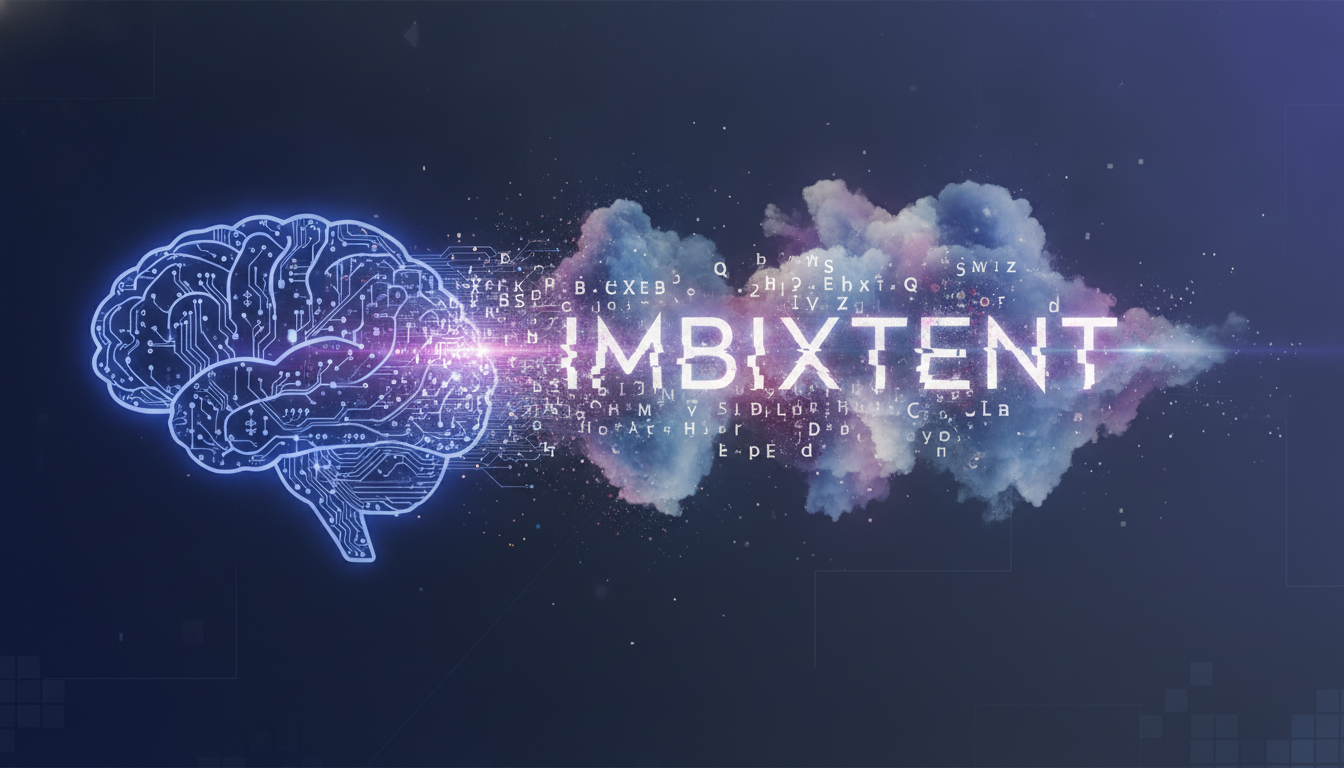
When AI Gets Creative: The Curious Case of Imbixtent
Artificial intelligence has become a significant part of our daily lives, influencing everything from how we communicate to how we receive information. However, a curious phenomenon has recently emerged: AI-generated words that don't exist. One such example is "imbixtent," which has baffled users and sparked conversations about the limitations and quirks of AI language models.
The Emergence of Hallucinated Words
Recently, users were met with the unusual term "imbixtent" in weather app notifications, leading many to question its meaning and origin. This isn't an isolated incident; similar reports have surfaced across various platforms, indicating a trend where AI systems generate nonsensical or newly coined words. Such occurrences are often referred to as "hallucinations," a term used to describe when AI produces outputs that do not correspond to reality.
The term "imbixtent" may sound plausible, but it lacks a concrete definition. This raises a vital question: how does an AI model conjure up a word that appears real yet does not exist? The answer lies in the architecture and operational constraints of the AI models employed in our devices.
The Mechanics Behind AI Hallucinations
AI notification summaries typically utilize smaller language models that operate locally on devices rather than relying on cloud-based systems. This design choice offers enhanced privacy as user data remains on the device. However, it also constrains the model's computational resources, resulting in reduced contextual awareness.
When processing notification text, the AI often encounters fragmented or incomplete information. As it attempts to generate coherent responses, it might inadvertently combine elements in a way that sounds like a legitimate word, leading to the production of terms like "imbixtent." This process is largely a function of probabilistic predictions, where the AI seeks to create language patterns based on the available data.
A Glimpse into Language Evolution
While the creation of nonsensical words may appear to be a bug, it sparks intriguing discussions about language evolution. Humans have long had a knack for inventing new terms, often driven by creativity and cultural trends. The popularization of words like "embiggen" and "cromulent" from media have shown that language is fluid and adaptable.
The case of "imbixtent" exemplifies how technology and human interaction can influence language. If enough users begin to adopt and use such a term, it could eventually find its way into everyday vernacular or even dictionaries, despite lacking an initial definition. Language is not static; it thrives on usage and cultural relevance.
The Role of Context in Language Models
Context is essential in language understanding and generation. When AI models interpret notifications, they often lack the broader context that humans naturally incorporate into their understanding of words and phrases. This lack of context can lead to amusing yet confounding outputs that challenge our perceptions of language.
Take, for example, the phenomenon of human-created gibberish, such as the famous Italian song "Prisencolinensinainciusol." While that was an intentional artistic expression, AI-generated words arise from algorithmic miscalculations. The distinction between purposeful creativity and accidental invention highlights the complexities inherent in AI language processing.
The Future of AI Language
As AI continues to evolve, it will undoubtedly refine its language capabilities. The occurrence of words like "imbixtent" may seem trivial, but they underscore the ongoing challenges in natural language processing. Developers are increasingly aware of the need for more robust models that can capture context more effectively and minimize hallucinations.
In the broader scope of artificial intelligence, these peculiar instances serve as a reminder of the delicate balance between innovation and accuracy. As we integrate AI into various aspects of daily life, understanding its limitations will be crucial.
Conclusion: Embracing the Quirks of AI
The case of "imbixtent" and similar hallucinated words invites us to reflect on our relationship with technology. While the oddities of AI may provoke confusion or laughter, they also provide valuable insights into the capabilities and limitations of these models.
As AI continues to permeate our lives, embracing its quirks while seeking to improve its functionality will be essential. Ultimately, the emergence of new words—whether intentional or accidental—highlights the dynamic nature of language and the fascinating intersection of human creativity and artificial intelligence.
Saksham Gupta
Founder & CEOSaksham Gupta is the Co-Founder and Technology lead at Edubild. With extensive experience in enterprise AI, LLM systems, and B2B integration, he writes about the practical side of building AI products that work in production. Connect with him on LinkedIn for more insights on AI engineering and enterprise technology.