Why Enterprise AI Adoption is Essential for Survival in 2026
Introduction
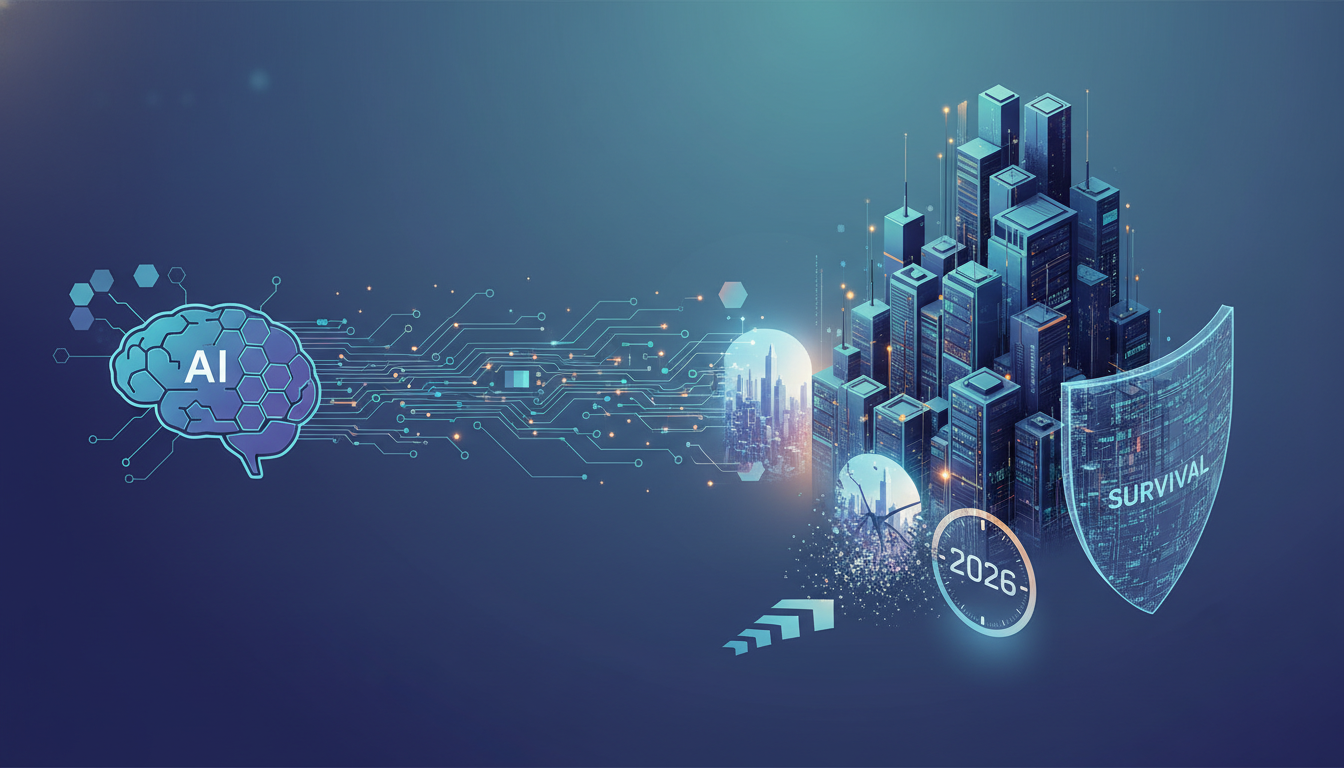
In the rapidly evolving business landscape, enterprise AI adoption is no longer just an option—it's a necessity. By 2026, businesses that have not integrated AI into their operations may find themselves at a significant disadvantage. This shift is not merely about keeping up with technological trends; it's about redefining how businesses operate, make decisions, and engage with customers in a world that demands speed, personalization, and intelligence. Let’s explore why enterprise AI adoption has become critical for survival and how it's reshaping competitive benchmarks across industries.
The Necessity of AI Infrastructure
AI is increasingly viewed as essential infrastructure, much like the internet and cloud computing before it. This transition is happening at breakneck speed, fueled by customer expectations that are being reset by AI-driven experiences. Consumers today interact with AI through personalized recommendations and intelligent customer service, and they expect similar interactions across all sectors. Enterprises must adapt to these heightened expectations to remain competitive.
The Market Shifts Accelerating AI Adoption
Several market forces are driving the urgency for AI adoption:
Resetting Customer Expectations: Customers now expect seamless, personalized interactions. Whether it's a retail experience or a banking service, the bar is set by the best digital interactions they encounter.
Decision Velocity: AI enables faster, more informed decision-making, a crucial advantage in today's volatile markets where delays can be costly.
AI-Native Competitors: Businesses built around AI from the ground up are setting new standards for efficiency and customer engagement, challenging traditional enterprises to catch up.
Redefined Workforce Productivity: AI is changing how work is done by automating repetitive tasks, allowing employees to focus on strategic, creative, and complex problem-solving tasks.
Organizational Adaptability: The ability to adapt quickly to change is becoming a key differentiator. AI facilitates this by enabling continuous learning and agile responses to market shifts.
The Hidden Costs of Delaying AI Adoption
Delaying AI adoption can result in a widening capability gap. Organizations that hesitate risk facing increased operational costs, slower response times, and missed opportunities for innovation. Moreover, they may struggle to attract and retain talent who seek environments that leverage advanced technologies. The real risk lies not in AI failure but in organizational inertia. Companies that resist the cultural shift necessary for AI integration may find themselves unable to keep pace with more agile competitors.
Culture Over Technology: The Real AI Challenge
Successful AI adoption is more about cultural transformation than it is about technology implementation. Organizations must foster a culture of continuous learning and experimentation. This involves moving beyond isolated AI projects to embedding intelligent systems into the core business strategy. Leaders play a pivotal role in this transformation by setting a clear AI vision, encouraging cross-functional collaboration, and ensuring responsible governance.
Human + AI: The Optimal Operating Model
The most successful enterprise models integrate human expertise with AI capabilities. Rather than replacing jobs, AI augments human efforts, enabling better decision-making and enhancing productivity. In this hybrid model, AI handles tasks that require speed and data processing, while humans focus on strategic thinking and emotional intelligence.
Building an AI-Ready Organization
To prepare for AI adoption, enterprises should focus on three key pillars:
Operational Readiness: Identifying areas where AI can improve efficiency and performance, particularly in repetitive and data-intensive processes.
Workforce Readiness: Ensuring that employees are equipped to collaborate with AI systems through training and upskilling.
Strategic Alignment: Aligning AI initiatives with long-term business goals and ensuring they support the organization’s competitive differentiation.
Conclusion
Enterprise AI adoption is no longer a forward-thinking strategy but a present-day business imperative. Organizations that embrace AI as a fundamental component of their operations will not only survive but thrive. The future belongs to those willing to evolve continuously, leveraging AI to build resilience, agility, and long-term growth. For enterprises, the journey towards becoming AI-ready begins now, and it requires a commitment to cultural change, strategic planning, and responsible innovation.
Saksham Gupta
Founder & CEOSaksham Gupta is the Co-Founder and Technology lead at Edubild. With extensive experience in enterprise AI, LLM systems, and B2B integration, he writes about the practical side of building AI products that work in production. Connect with him on LinkedIn for more insights on AI engineering and enterprise technology.