AI Investment: The Shift Towards Data Center Dominance
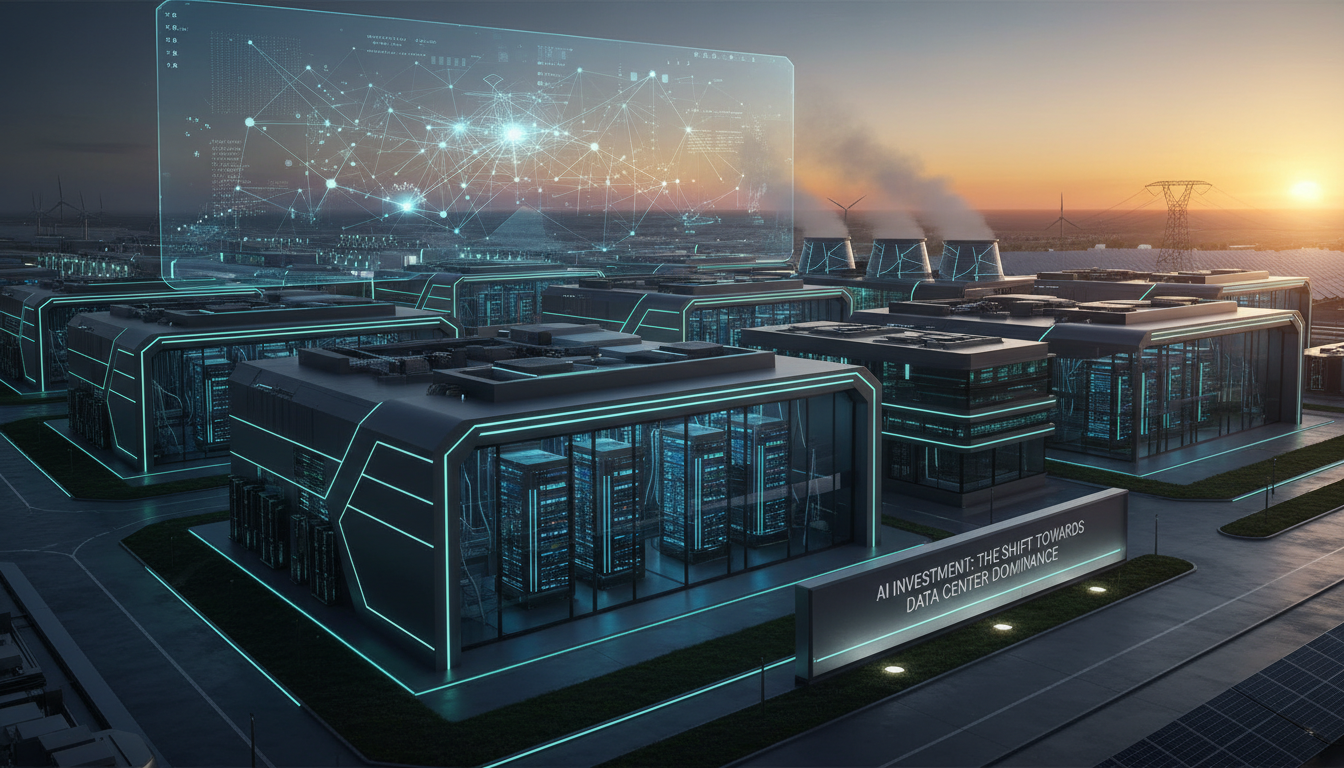
AI Investment: The Shift Towards Data Center Dominance
Artificial intelligence (AI) is transforming industries, reshaping markets, and influencing investment strategies globally. As the AI landscape matures, the initial excitement is giving way to a more calculated focus on infrastructure, particularly data centers. This shift marks a pivotal change in how companies and investors approach AI, emphasizing the critical role of robust data infrastructure in sustaining AI advancements.
The Evolving AI Investment Landscape
In recent years, AI investments have surged, capturing the attention of investors eager to capitalize on the technology's potential. However, as the hype begins to settle, a new investment wave is emerging, characterized by a "flight to quality." Investors are now prioritizing companies that possess extensive data center networks and computing infrastructure, recognizing these assets as the backbone of AI capabilities.
Goldman Sachs' analysis underscores this transition, highlighting a growing focus on data center infrastructure as crucial for AI's future. The firm anticipates a significant increase in spending on AI infrastructure, driven by the need to expand computing capacity for model training and deployment. This shift reflects a broader trend towards sustainable and scalable AI solutions, with data centers at the core of this evolution.
Data Centers: The New Powerhouses of AI
Data centers are becoming the epicenter of AI activity, accommodating the computational demands of large-scale AI models. Unlike traditional cloud workloads, AI tasks require substantial computing power, particularly for training models that demand thousands of chips operating in tandem. As AI continues to grow, the demand for data center capacity is expected to soar, with AI workloads projected to account for a significant portion of total data center capacity in the coming years.
This transformation is not just about hardware; it's also about infrastructure resilience. Energy supply, cooling systems, and geographic location play pivotal roles in determining data center efficiency. Companies are strategically positioning data centers near stable energy sources and high-capacity fiber networks to ensure seamless operations. This strategic positioning also mitigates environmental impact, as efficient cooling systems and sustainable energy sources help minimize energy consumption and carbon emissions.
Infrastructure Challenges and Strategic Planning
The rapid expansion of data centers presents both opportunities and challenges. While the demand for robust infrastructure is clear, constructing and maintaining these facilities involves navigating complex supply chains and logistical hurdles. Land acquisition, grid connections, and long-term energy agreements are just a few of the factors influencing data center projects.
These challenges necessitate careful planning and strategic foresight. Companies must ensure they have the necessary infrastructure in place to support their AI ambitions. This involves not only investing in physical infrastructure but also addressing potential bottlenecks such as electrical equipment shortages and grid expansion delays. As a result, companies with established data center networks are gaining favor among investors, as they offer a more stable foundation for AI growth.
The Broader Implications for the AI Sector
The shift towards data center dominance has broader implications for the AI sector as a whole. As infrastructure becomes a focal point of AI investment, it underscores the importance of sustainable and scalable growth strategies. Data center operators and chip manufacturers are increasingly seen as key players in the AI ecosystem, providing the essential services needed for AI applications to thrive.
This focus on infrastructure also brings to light critical issues such as energy demand and environmental impact. As global data center power demand rises, governments and industry planners are prompted to consider new investments in energy infrastructure. The intersection of AI and energy presents an opportunity for innovation, driving advancements in energy-efficient technologies and sustainable practices.
Conclusion
The AI investment landscape is undergoing a significant transformation, as data centers rise to prominence as the backbone of AI capabilities. This shift reflects a more measured approach to AI, where infrastructure plays a pivotal role in sustaining growth and innovation. As companies and investors navigate this evolving landscape, the focus on data centers underscores the critical importance of robust infrastructure in realizing AI's full potential. This new phase of AI investment is not just about algorithms and software; it's about building the foundations that will support AI's continued evolution and impact across industries.