Empowering the Future: How Edge AI is Revolutionizing Accessibility and Performance
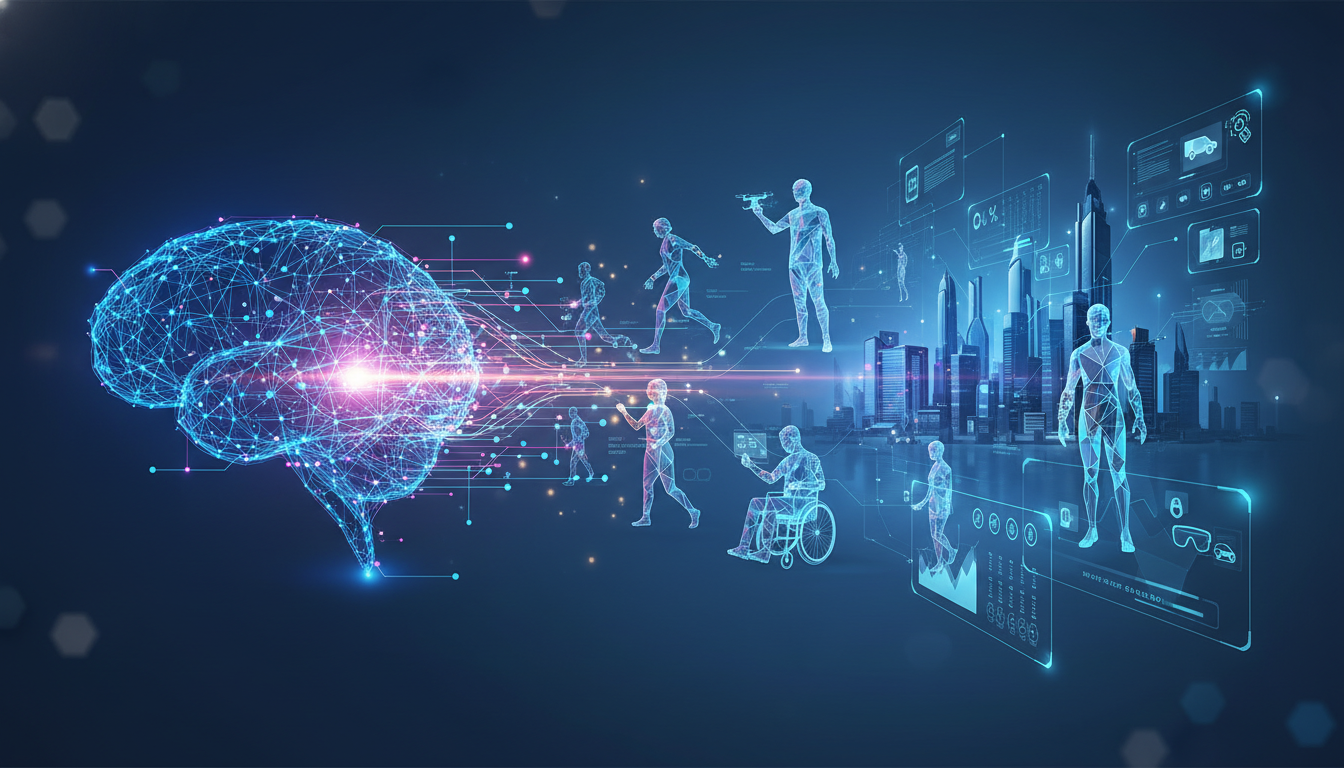
Empowering the Future: How Edge AI is Revolutionizing Accessibility and Performance
The evolution of artificial intelligence has been a journey marked by monumental shifts in technology and capability. However, one of the most transformative changes currently underway is the move towards Edge AI. This paradigm shift is not just a technological advancement; it’s a revolution that is set to redefine how we interact with AI, making it more accessible and efficient than ever before.
The Rise of Edge AI
Traditionally, AI models have relied on powerful cloud-based infrastructure to perform complex computations. This dependency on centralized data centers has often posed challenges in terms of latency, energy consumption, and accessibility. But the landscape is changing rapidly. The advent of Edge AI is bringing AI capabilities closer to the end-user by enabling devices like smartphones, laptops, and tablets to process data locally.
This shift is largely driven by advancements in hardware and software, allowing smaller, yet powerful AI models to run efficiently on consumer-grade devices.
Enhancing Accessibility
One of the most significant benefits of Edge AI is its ability to democratize access to AI technology. By leveraging devices that people already own, Edge AI eliminates the barriers posed by expensive cloud infrastructure. This is particularly beneficial in regions with limited internet connectivity, where reliance on cloud-based solutions is not feasible.
Moreover, Edge AI empowers users by providing instant responses to queries without the latency associated with cloud communication. This immediacy is crucial for applications requiring real-time decision-making, such as autonomous vehicles or smart home systems. By processing data locally, Edge AI not only speeds up response times but also reduces the energy costs associated with transmitting data to and from the cloud.
Redefining Performance Metrics
The shift towards Edge AI is also prompting a reevaluation of how we measure AI performance. Traditional metrics have focused on accuracy and speed, often neglecting the environmental impact of AI operations. However, researchers are now advocating for a new metric known as "intelligence per watt," which evaluates the energy efficiency of AI models.
Studies, such as those conducted by Stanford University’s Hazy Research, highlight the potential of Edge AI to significantly reduce energy consumption. By keeping data processing local, energy savings are substantial, making Edge AI a more sustainable choice. This focus on energy efficiency is becoming increasingly important as the world grapples with the environmental implications of large-scale computing.
Bridging the Gap Between Local and Cloud Computing
While cloud computing will continue to play a critical role in AI, the gap between local and cloud processing is narrowing. With advancements in local hardware, such as Apple’s M4 MAX and Nvidia’s DGX Spark, consumer devices are becoming capable of handling complex models that were once the exclusive domain of cloud infrastructure.
This convergence of capabilities is paving the way for hybrid models that leverage the strengths of both local and cloud computing. For instance, smaller models can handle routine tasks locally, while more complex computations are offloaded to the cloud when necessary. This hybrid approach optimizes performance while minimizing latency and energy use.
The Future of AI Interaction
As Edge AI continues to evolve, it is set to transform the way we interact with technology. The ability to process AI models locally will expand the possibilities of AI applications, from enhancing user experiences in wearable devices to improving the functionality of IoT systems.
In conclusion, Edge AI represents a critical shift in the AI landscape, offering a more efficient and accessible model of computation. By leveraging local devices, it empowers users with faster, more sustainable AI solutions that are ready to meet the demands of a rapidly evolving technological world. As we move towards this future, the potential for innovation is boundless, promising a new era of AI-driven possibilities.