Mastercard's Revolutionary Approach to Fraud Detection: The Rise of Large Tabular Models in Finance AI
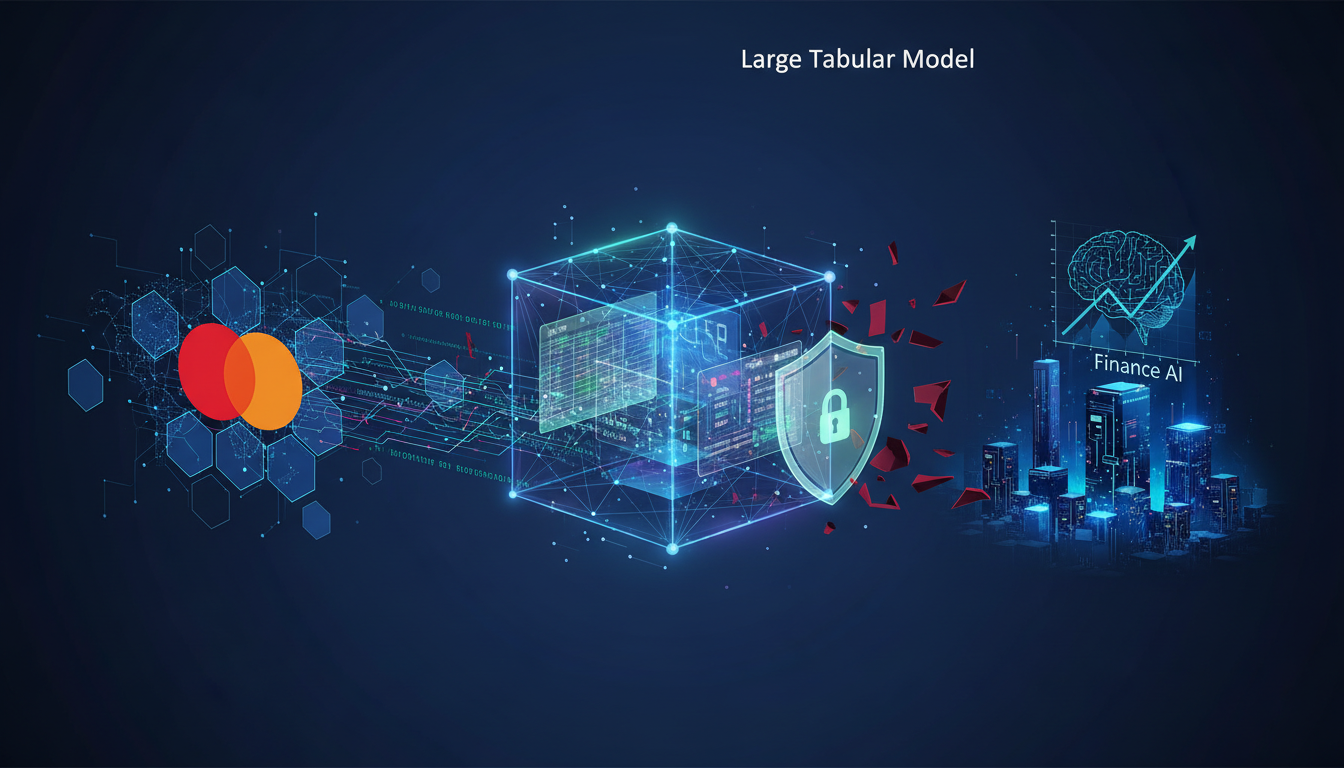
Mastercard's Revolutionary Approach to Fraud Detection
In a rapidly evolving financial landscape, where digital transactions have become the norm, security and authenticity in digital payments are paramount. Mastercard has taken a significant step forward in addressing these challenges by developing a Large Tabular Model (LTM). This model is set to transform the way fraud detection is approached in the finance industry, offering a new layer of security that leverages vast amounts of transaction data.
Understanding the Large Tabular Model
Unlike traditional AI models that rely on unstructured data inputs like text or images, Mastercard's LTM is trained on structured transaction data. This model focuses on analyzing relationships between fields in multi-dimensional data tables, making it more akin to machine learning than conventional AI. The LTM is designed to parse behavioral patterns from billions of card transactions, identifying anomalies that traditional models might miss.
The model's architecture allows it to learn from raw inputs, discern predictable relationships, and flag unusual patterns without predefined rules. This capability makes it a robust tool in fraud detection, capable of differentiating between legitimate transactions and potential fraud more accurately than its predecessors.
Privacy and Data Usage
One of the key concerns in utilizing AI for financial services is privacy. Mastercard addresses this by ensuring personal identifiers are removed before data is used in the LTM, thereby mitigating privacy risks. The emphasis is on identifying patterns rather than focusing on individual identities. This approach not only respects user privacy but also enhances the model's ability to detect fraud by relying on behavioral data from a broader perspective.
The richness of the data used allows the model to infer commercially valuable insights without compromising personal information. Despite the anonymization process potentially removing some signals useful for risk assessment, the volume and diversity of data compensate for any loss, ensuring the model's effectiveness.
Deployment in Cybersecurity
Mastercard's first application of the LTM is in cybersecurity, specifically for fraud detection. The model is integrated into existing fraud detection systems, working alongside human input to refine and improve its accuracy. Traditional models often require continuous adjustments to recognize suspicious behavior, such as sudden increases in transaction frequency or geographically dispersed purchases within a short timeframe. The LTM, however, boasts improved performance in identifying high-value, low-frequency transactions, distinguishing legitimate activity from anomalies with greater precision.
The deployment strategy reflects a hybrid approach, combining established procedures with the innovative capabilities of the LTM. This cautious integration is essential, considering the regulatory framework under which financial institutions operate. Mastercard acknowledges that while the LTM is a powerful tool, no single model can cover all scenarios, emphasizing the importance of a diverse toolkit in fraud detection.
Broader Applications and Future Plans
Beyond fraud detection, Mastercard envisions the LTM being applied in areas such as loyalty programs, portfolio management, and internal analytics. These domains, characterized by large volumes of structured data, stand to benefit significantly from the insights provided by the LTM. The potential to streamline processes and reduce costs by using a single foundation model, adaptable to various tasks, is a compelling advantage.
However, the multi-functionality of the LTM does pose risks. A failure in such a widely deployed model could have far-reaching consequences. To mitigate this, Mastercard continues to develop the model's sophistication and plans to expand the scale of data used. Future plans include providing API access and SDKs to enable internal teams to build new applications, further embedding the LTM into Mastercard’s technological ecosystem.
Challenges and Considerations
As with any emerging technology, the adoption of LTMs comes with challenges. Robustness under adversarial conditions, long-term costs, and regulatory acceptance are critical factors that will influence the pace and extent of their adoption. Mastercard is committed to maintaining data responsibility, emphasizing privacy, transparency, model explainability, and auditability. The regulatory scrutiny that accompanies systems influencing credit decisions or fraud outcomes is an essential consideration as the LTM continues to evolve.
Conclusion
Mastercard's Large Tabular Model represents a significant advancement in the field of financial AI, particularly in fraud detection. By leveraging structured transaction data, the LTM offers a new level of accuracy and security. While challenges remain, the potential benefits in terms of enhanced fraud detection and broader applications across the financial sector make it a promising tool in Mastercard’s arsenal. As the model continues to develop, it will be intriguing to see how it reshapes the landscape of financial security.