Maximize Your Agent Builder: Mastering Memory for Optimal Performance
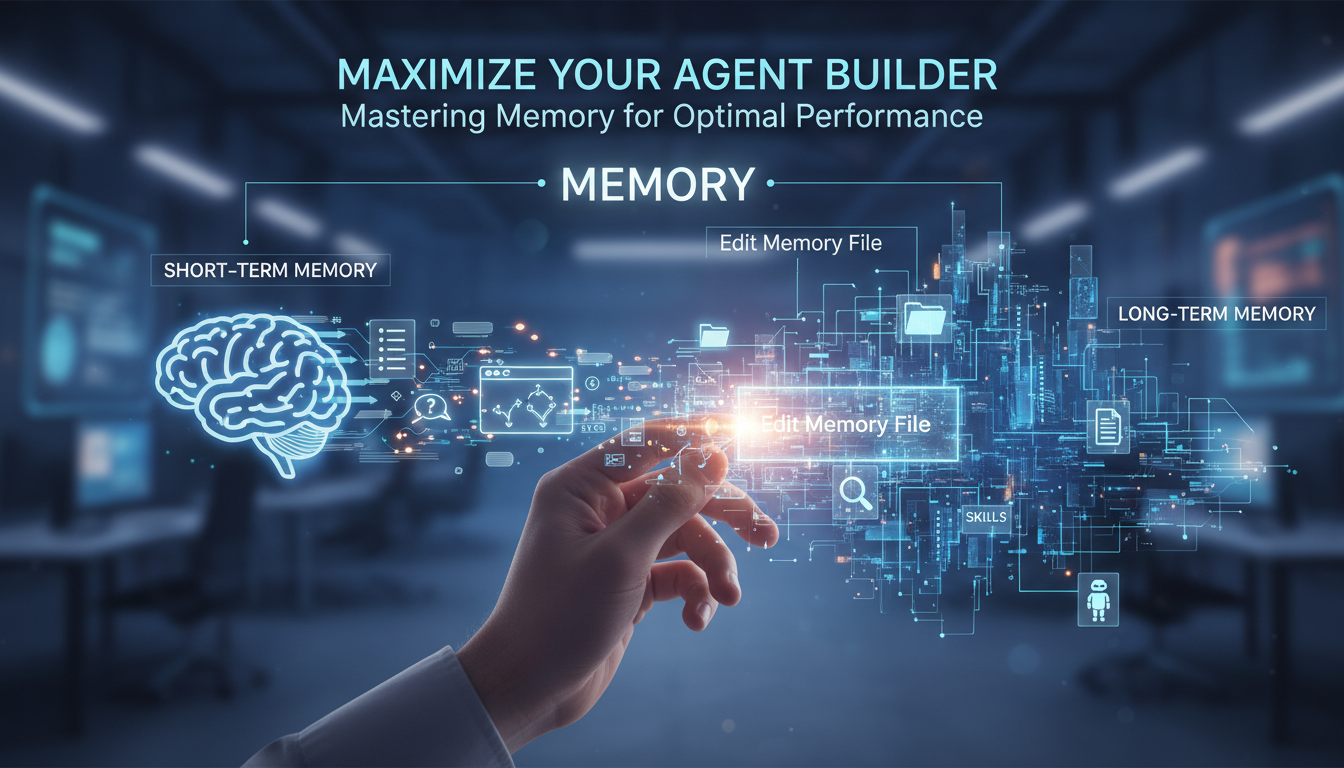
Maximizing Agent Builder: Mastering Memory for Optimal Performance
In the realm of digital automation and AI, maximizing the potential of your tools is crucial for achieving efficiency and productivity. One such tool, Agent Builder, is designed to continually enhance its capabilities through your interactions. By understanding and optimizing its memory functionality, you can transform this tool into a valuable collaborator in your tasks.
Understanding Memory in Agent Builder
Before diving into strategies for optimizing memory, it's essential to grasp how memory functions within the Agent Builder framework. Agent Builder is powered by Deep Agents, utilizing an open-source architecture for managing long-running tasks. The tool leverages a large language model (LLM) for reasoning, and it has the ability to take actions, such as web browsing or interfacing with applications like Slack and Google Sheets. A crucial component in this setup is the filesystem, which houses the memory.
Types of Memory
-
Short-term Memory: This captures files and data generated during a specific task, such as plans, tool outputs, and task progress. This information is only accessible within the context of the current conversation or thread and does not persist across different interactions.
-
Long-term Memory: This is where enduring information is stored. Located in a persistent path, this memory retains your agent's core instructions and skills across various conversations, allowing it to recall past learnings and instructions.
Strategies to Optimize Agent Memory
Encourage Memory Retention
As you work with your agent, you generate valuable context and insights. Whether it's a format that works well or specific preferences for how results should be presented, these insights initially reside in short-term memory. However, you have the power to tell your agent to retain this information for future use.
Commands such as "Remember to use bullet points," or "Incorporate today's learnings into your memory," prompt the agent to update its long-term memory. This proactive feedback can reduce the need for repeated corrections and enhance the agent's performance over time.
Utilize Specialized Skills
While long-term memory retains general instructions, specialized tasks often require tailored context. Skills in Agent Builder serve this purpose by acting as a reference library. Instead of the agent attempting to memorize everything upfront, it accesses relevant skills as needed. This focused approach prevents information overload and potential errors in task execution.
For instance, if your agent is used for writing content about different products, you can set up skills for each product. This ensures the agent only pulls in necessary context based on the current task, maintaining clarity and precision.
Direct Memory Editing
While Agent Builder autonomously updates its instructions based on feedback, sometimes manual intervention is beneficial. By accessing and editing the agent’s memory files directly, you can gain insights into its operational priorities and make quick adjustments. This hands-on approach is especially useful for making precise changes or understanding the agent's decision-making process.
Building a Smarter Agent
To truly harness the potential of Agent Builder, consider these strategies for enhancing its memory capabilities. Encourage active memory retention, leverage skills for specialized tasks, and don't hesitate to examine and edit its memory files directly. By doing so, you'll cultivate a more responsive and efficient digital assistant.
As you refine your agent's capabilities, you'll likely find innovative ways to tailor it to your specific needs. Whether you're streamlining workflows, generating content, or managing data, a well-optimized agent can become an invaluable ally.
Explore these techniques, and as your agent evolves, share your successes and insights with the broader community. Together, we can push the boundaries of what's possible with AI-driven tools.