Reviving the Past: How AI is Bringing Legacy Machines Back to Life
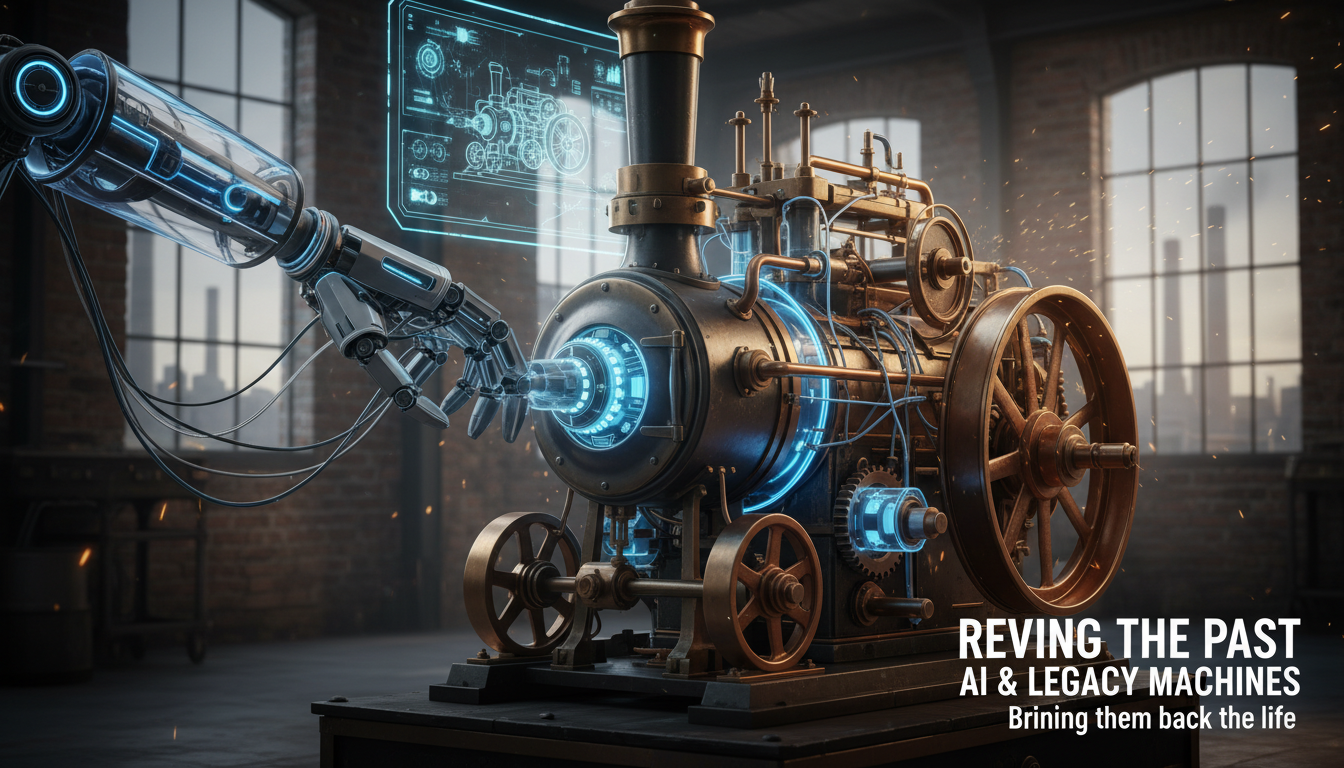
Reviving the Past: How AI is Bringing Legacy Machines Back to Life
Artificial intelligence (AI) is increasingly becoming a cornerstone of modern manufacturing, ushering in what is often termed as the Fourth Industrial Revolution or Industry 4.0. However, the journey towards AI-driven manufacturing isn't solely about deploying cutting-edge technology. A significant part of this transformation involves breathing new life into existing machinery, some of which have been laboring for decades. By retrofitting these legacy machines with modern sensors, manufacturers are not just preserving their investments but also unlocking the treasure troves of data that these machines can offer.
The Challenge of Legacy Equipment
Many factories, especially in sectors like pharmaceuticals, automotive, and food processing, have been operating with the same equipment for 20 or even 30 years. These machines are often robust and reliable, but they lack the digital interfaces necessary for modern analytics. The absence of real-time data collection from these machines has been a significant barrier to embracing AI technologies. Without consistent, high-quality data, the potential of AI to enhance productivity and efficiency remains untapped.
Retrofitting: A Practical Solution
Instead of replacing costly equipment, manufacturers are opting for retrofitting. This involves equipping existing machines with sensors and data connections, effectively converting them into smart devices. The process of retrofitting is less disruptive and more cost-effective compared to the capital-intensive task of acquiring new machinery. Furthermore, it circumvents the lengthy validation processes required in regulated industries when new equipment is introduced.
Retrofitting usually involves the installation of external sensors that monitor basic machine functions—such as vibration, temperature, and motor current. These sensors provide time-stamped, structured data that can be analyzed for insights on machine performance and efficiency. Importantly, this data can be collected without interrupting production, as the machine's core functions remain unchanged.
Transforming Production with Real-Time Data
The true power of retrofitting lies in the real-time visibility it provides into machine operations. With sensors in place, manufacturers can move from reactive to proactive management. For example, instead of inferring downtime, managers can measure it precisely, identify the causes, and address them quickly. Real-time data enables faster decision-making and prioritization of maintenance tasks based on concrete evidence.
High-performing manufacturers often lead by leveraging this data-first approach. Known as "lighthouse" manufacturers, these organizations have demonstrated that real-time monitoring forms the bedrock of continuous improvement. By focusing on visibility, they can make incremental gains in productivity without introducing radical changes or autonomous systems.
In practical terms, industries like food and beverage have shown how instrumenting production lines can lead to significant improvements. Small disruptions in packaging or bottling processes can have disproportionate effects on output. However, with real-time data, these issues are identified and resolved more swiftly, increasing throughput without altering existing equipment.
The Role of Overall Equipment Effectiveness (OEE)
A common metric used to gauge improvements in manufacturing is Overall Equipment Effectiveness (OEE), which combines availability, performance, and quality. By making machine states visible, manufacturers can directly measure these components and focus their improvement efforts. The experience of Johnson & Johnson exemplifies this approach. By integrating data from retrofitted machines into their daily operations, they achieved a 35% boost in productivity.
Becoming AI-Ready
To be "AI-ready" doesn't necessarily mean having an army of autonomous robots on the factory floor. Instead, it means having a reliable stream of data reflecting consistent machine events. Once this data is in place, manufacturers can advance to more sophisticated applications like predictive maintenance and quality analytics.
The initial gains from retrofitting are evident: enhanced visibility, quicker decision-making, and fewer operational surprises. For manufacturers with established routines for daily reviews and continuous improvement, the adoption of instrumented data is immediate and impactful. The success story of Johnson & Johnson highlights what is possible when data is effectively integrated into manufacturing processes.
In conclusion, the path to a digitally transformed factory doesn't always start with the latest technology. Often, it begins with understanding and leveraging the capabilities of the machinery already in place. By bridging the data gap with AI and retrofitting strategies, manufacturers can achieve significant productivity improvements while preserving their existing investments. This pragmatic approach not only revives the past but also paves the way for a more efficient and intelligent future in manufacturing.