AI-Native vs Traditional Software Development: Unlocking the Future of Engineering
Introduction
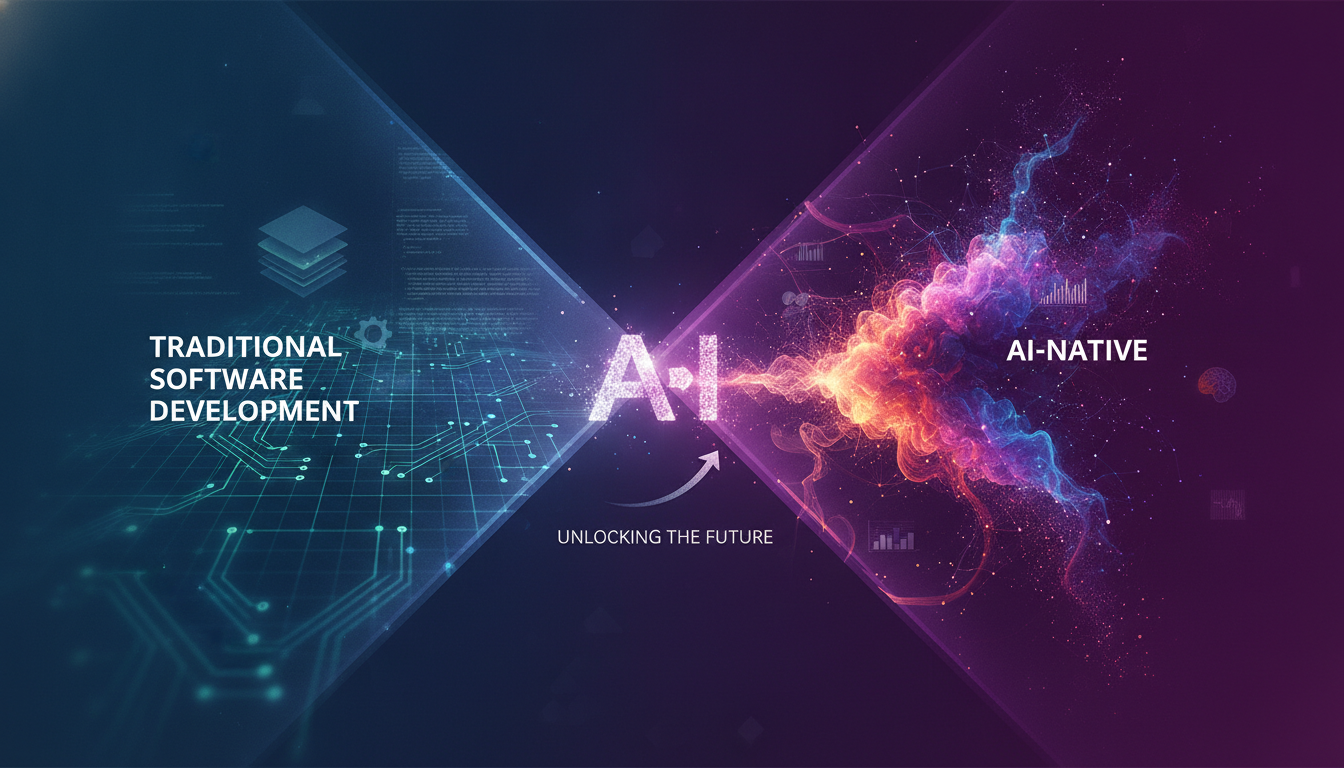
The landscape of software development is undergoing a transformative shift with the emergence of AI-native methodologies. This new approach contrasts significantly with traditional software development, which has been the standard for decades. Understanding the nuances between these two paradigms is crucial for enterprises looking to stay competitive in a rapidly evolving technological environment.
What Is AI-Native Software Development?
AI-native software development integrates artificial intelligence directly into the software development lifecycle (SDLC). Unlike traditional methods that rely on human-driven processes, AI-native development treats AI as a fundamental component throughout all stages—planning, coding, testing, deployment, and operations. This means that AI actively collaborates with developers, automating repetitive tasks and enhancing decision-making.
Key capabilities of AI-native development include:
- Intelligent code generation
- Automated documentation
- AI-assisted requirements analysis
- Continuous code review
- Security vulnerability detection
These capabilities allow development teams to focus on complex problem-solving rather than getting bogged down by routine tasks.
What Is Traditional Software Development?
Traditional software development is characterized by structured methodologies and human-centric processes. It emphasizes the importance of governance, long-term maintainability, and standardized practices. Development teams follow well-defined protocols, relying on established design patterns, rigorous testing frameworks, and comprehensive code reviews.
In this model, project management and engineering practices are paramount, ensuring that the final software product meets security and compliance standards. While traditional methods can be slower and less flexible, they offer a high degree of reliability and architectural consistency.
Key Differences Between AI-Native and Traditional Software Development
- Integration of AI: AI-native development embeds AI throughout the SDLC, while traditional development uses AI as an auxiliary tool.
- Automation: AI-native approaches automate repetitive tasks, whereas traditional methods require significant manual effort.
- Collaboration: In AI-native development, AI actively collaborates with developers; traditional methods rely solely on human expertise.
- Speed of Development: AI-native methods can significantly accelerate prototyping and testing, while traditional development may involve longer cycles.
- Governance and Compliance: Traditional development prioritizes governance and compliance, while AI-native approaches may introduce new challenges in these areas.
- Architectural Decisions: Traditional development emphasizes human oversight for architecture, whereas AI-native methods can generate recommendations based on data-driven insights.
- Quality Assurance: AI-native development supports continuous testing and monitoring, while traditional methods often depend on scheduled testing phases.
- Technical Debt Management: AI-native systems can help identify and manage technical debt proactively, while traditional methods require manual tracking.
- Skill Requirements: AI-native development necessitates a different skill set, including familiarity with AI technologies, whereas traditional development focuses on conventional programming skills.
- Innovation: AI-native approaches foster rapid innovation by enabling teams to experiment more freely, while traditional methods may be more risk-averse.
Which Approach Is Right for Your Enterprise?
Choosing between AI-native and traditional software development isn't a straightforward decision. Many enterprises find that a hybrid model works best. By integrating AI into their existing frameworks, organizations can harness the benefits of both methodologies. This allows for accelerated execution while maintaining the governance and quality assurance that traditional practices provide.
Enterprise Adoption: Where AI-Native Development Delivers the Most Value
AI-native development can yield significant advantages for enterprises, particularly in areas like:
- Rapid Prototyping: AI can help generate prototypes faster, allowing businesses to reach their markets more quickly.
- Enhanced Developer Productivity: By automating mundane tasks, developers can focus on higher-value activities.
- Improved Customer Experiences: AI-driven insights can lead to more tailored and effective solutions.
- Scalability: With AI's capabilities, scaling applications becomes more manageable without a proportional increase in resources.
A Practical Roadmap to AI-Native Adoption
- Assess Current Capabilities: Evaluate existing development practices and identify areas where AI can add value.
- Invest in Training: Equip your team with the necessary skills to leverage AI technologies effectively.
- Implement Gradually: Start with pilot projects to test AI-native methodologies before full-scale adoption.
- Monitor Outcomes: Establish KPIs to measure the success of AI integration in your development processes.
- Iterate and Improve: Continuously refine your approach based on feedback and performance metrics.
Conclusion
The future of software development lies at the intersection of traditional and AI-native methodologies. By embracing AI as a core component of the development process, organizations can enhance productivity, accelerate innovation, and maintain high standards of quality and governance. The key to success will be in finding the right balance between leveraging AI's capabilities and adhering to the principles that have long guided software engineering.
In a world where technology is evolving at an unprecedented pace, understanding and adapting to these new paradigms will be essential for enterprises aiming to stay ahead of the curve.
Saksham Gupta
Founder & CEOSaksham Gupta is the Co-Founder and Technology lead at Edubild. With extensive experience in enterprise AI, LLM systems, and B2B integration, he writes about the practical side of building AI products that work in production. Connect with him on LinkedIn for more insights on AI engineering and enterprise technology.