China's AI Revolution: Insights from the 15th Five-Year Plan
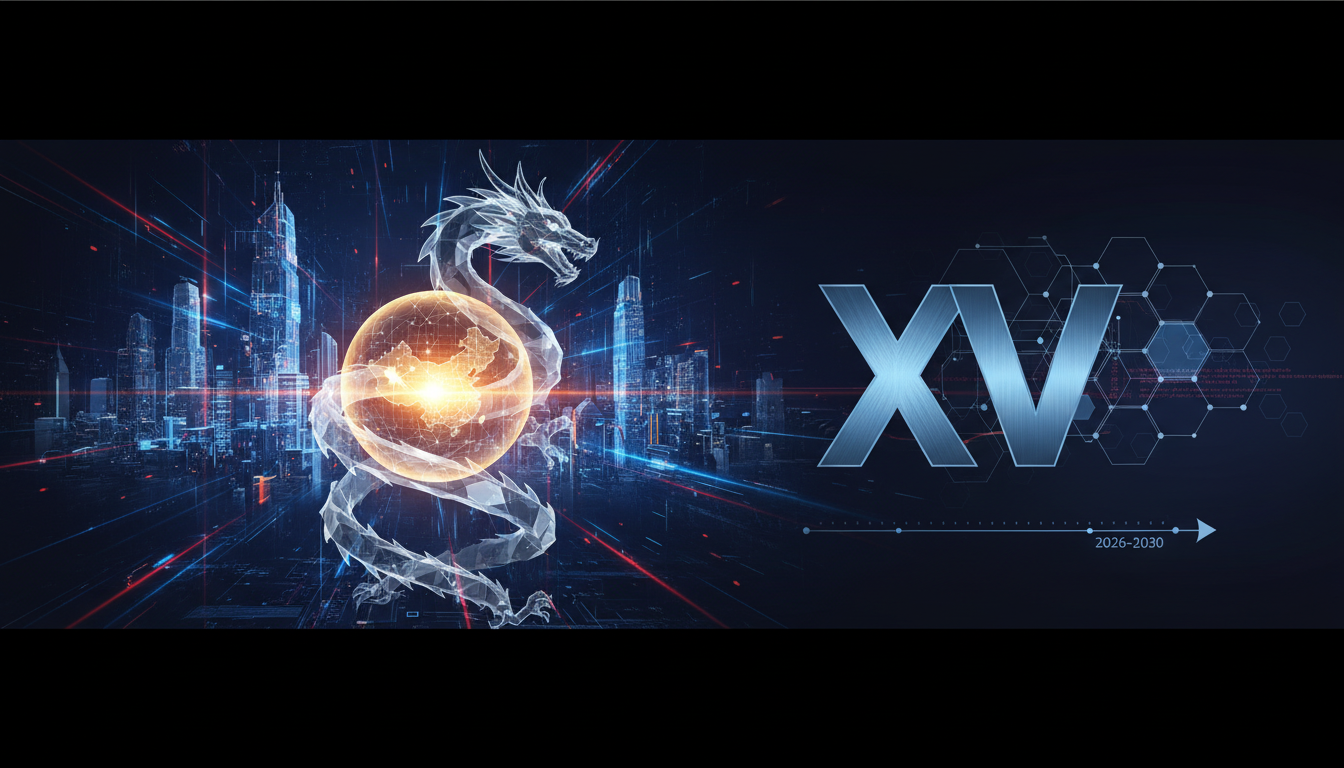
China's 15th Five-Year Plan is a comprehensive blueprint that outlines the country's strategic priorities from 2026 through to 2030. This crucial document illuminates China's focus on advancing artificial intelligence (AI) as a cornerstone of its economic and technological ambitions. With AI standing alongside other frontier technologies like quantum computing and biotechnology, the plan sets an ambitious agenda for the nation’s pursuit of innovation.
Strategic Science Policy and AI
AI has been identified as a pivotal area in China's strategic science policy. The plan prioritizes the development of high-performance AI chips and the software necessary to support these technologies. To achieve these objectives, the Chinese government emphasizes enhancing academic and industry research, specifically focusing on new model architectures and core algorithms. This focus reflects not only a commitment to keeping pace with global technological advancements but also an ambition to lead in the AI sector.
Infrastructure to Support AI
A critical component of the Five-Year Plan is the enhancement of China's digital infrastructure to accommodate AI advancements. The plan calls for the development of sophisticated communication technologies, including satellite systems, 5G Advanced (5G+), and 6G networks. These are vital to managing the increased data transmission demands required by AI applications. By building robust infrastructure, China aims to bolster data processing capabilities, thereby supporting the seamless integration of AI into various sectors.
Building Intelligent Computing Clusters
The plan introduces the concept of "intelligent computing clusters," which are envisioned as national computing hubs. These hubs aim to democratize access to computing resources, allowing a wider swath of the population and smaller enterprises to leverage cutting-edge technology. This initiative is poised to reduce barriers for small firms, enabling them to compete in the rapidly evolving tech landscape. Such clusters are expected to facilitate advancements in AI model training and inference, particularly in multi-modal and agent-based AI systems.
AI in Economic Sectors
China's strategic plan underscores the role of AI across multiple economic sectors, including manufacturing, energy, agriculture, and the service industry. The integration of AI in these areas is anticipated to enhance industrial design, optimize production processes, and improve operations management. In agriculture, AI is expected to drive more efficient production methods. Meanwhile, in the service sector, AI applications are envisioned to transform finance, logistics, and software services, reflecting AI's versatility and potential for widespread impact.
Consumer and Public Sector Applications
The Five-Year Plan also highlights the expansion of AI-enabled devices for consumers. This includes an increase in AI integration in everyday devices such as phones, computers, and robots. AI's reach is expected to extend into education, healthcare, and social services, with applications like adaptive learning systems, diagnostic support, and welfare management systems. At the governmental level, the plan promotes the enhancement of digital services across public sectors, underpinned by integrated data systems and standard models.
Governance and International Cooperation
Governance and regulation loom large in China's AI strategy. The Five-Year Plan stresses the need for specific legal and regulatory frameworks to ensure AI's secure and transparent deployment. This includes the registration of new algorithms and the establishment of security protocols to mitigate risks like data misuse and the proliferation of deepfakes. Although generally conservative in international cooperation, China signals a willingness to engage in dialogue on international standards for data flows and infrastructure.
Conclusion
China's 15th Five-Year Plan outlines an ambitious roadmap for AI development, positioning the country as a potential leader in the global technology landscape. By prioritizing infrastructure, broadening access to computing resources, and encouraging sectoral integration, China is setting the stage for significant AI advancements. The plan's comprehensive approach, coupled with a focus on governance and international engagement, underscores China's strategic vision for AI as a transformative force in its economic and technological future. As these initiatives unfold, the world will be watching closely to see how China navigates the challenges and opportunities that lie ahead in the AI revolution.
Saksham Gupta
Founder & CEOSaksham Gupta is the Co-Founder and Technology lead at Edubild. With extensive experience in enterprise AI, LLM systems, and B2B integration, he writes about the practical side of building AI products that work in production. Connect with him on LinkedIn for more insights on AI engineering and enterprise technology.