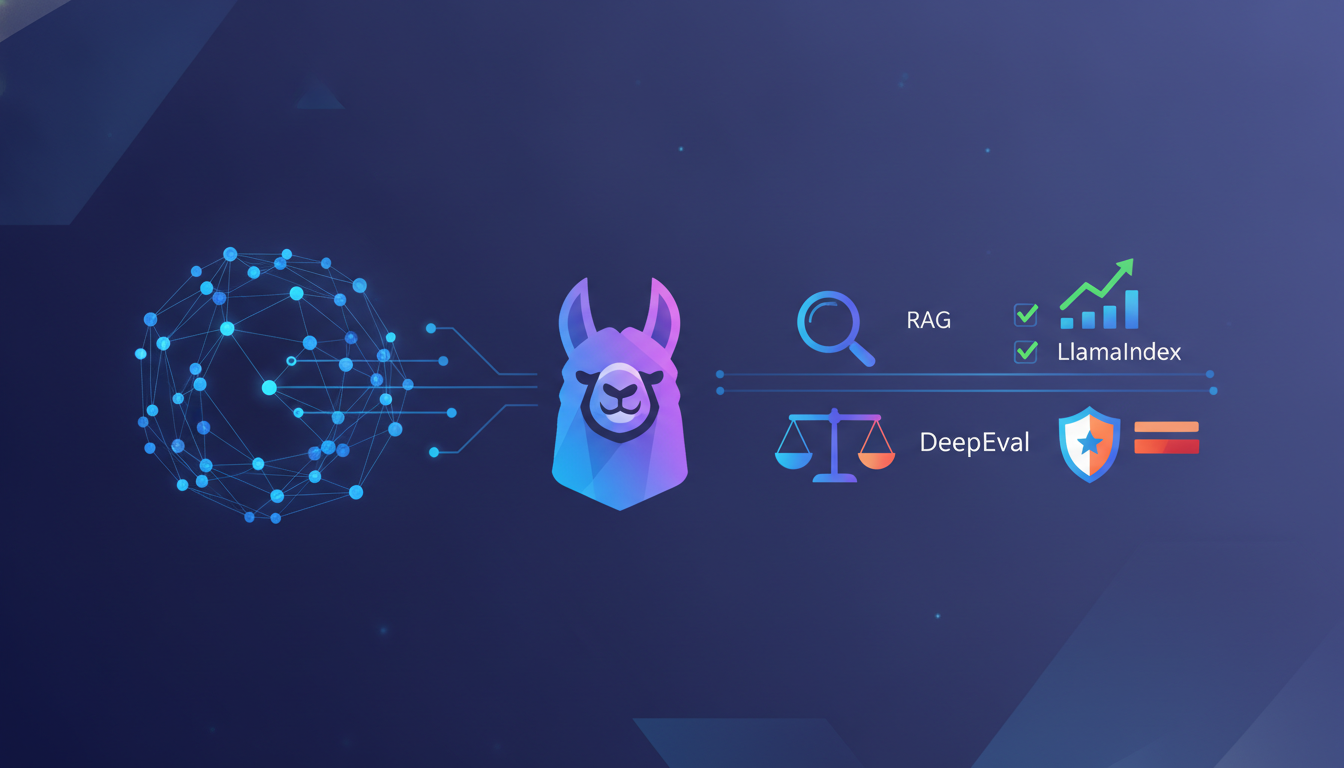
A Practical Guide for Engineers to Evaluate RAG Systems Using LlamaIndex and DeepEval
Hook: The Challenge of Evaluating RAG Systems
In the fast-evolving landscape of enterprise AI, evaluating Retrieval-Augmented Generation (RAG) systems poses a significant challenge for technical decision-makers. Engineers often grapple with selecting the right metrics and tools to ensure their RAG pipelines are both efficient and effective. As enterprises in India increasingly adopt AI solutions, the need for a structured evaluation framework becomes critical.
Answer-first summary
To effectively evaluate RAG systems using LlamaIndex and DeepEval, engineers should focus on defining relevant metrics such as Answer Relevancy, Faithfulness, and Contextual Precision. By setting up a RAG application with LlamaIndex and leveraging DeepEval's comprehensive metrics, enterprises can optimize their AI systems for improved performance. This guide outlines a step-by-step approach to achieve this, ensuring that your RAG systems align with your business objectives.
What Are the Key Metrics for RAG Evaluation?
When evaluating RAG systems, three primary metrics stand out: Answer Relevancy, Faithfulness, and Contextual Precision. Answer Relevancy measures how well the output of your LLM application matches the user's input. Faithfulness checks whether the LLM's output factually aligns with the retrieved context. Contextual Precision evaluates the ranking of relevant information chunks. Each metric is influenced by different parameters in your pipeline, such as the prompt template and the LLM model used. Understanding these metrics is crucial for identifying areas of improvement in your RAG system, allowing for targeted optimization.
How to Set Up a RAG Application with LlamaIndex?
LlamaIndex provides a flexible framework for building RAG applications. To set up your RAG system, start by using the VectorStoreIndex to load your knowledge base documents. This can be followed by configuring the VectorIndexRetriever and constructing a RetrieverQueryEngine as your main RAG application. The use of a top-K setting, such as 10, and a model like OpenAI's gpt-3.5-turbo can significantly impact the system's performance. By carefully selecting these settings, enterprises can tailor their RAG applications to meet specific business needs, ensuring both efficiency and effectiveness in information retrieval.
How to Prepare and Run Test Cases with DeepEval?
Preparing test cases is a critical step in evaluating RAG systems. Begin by defining user inputs and capturing the LLM's response alongside the retrieved context. Each test case serves as a unit in LLM testing, helping to evaluate the model's performance across various inputs. DeepEval facilitates this process by offering a robust RAG Synthesizer to generate diverse test cases. Once test cases are defined, they can be evaluated using DeepEval's metrics, providing insights into the system's strengths and weaknesses. This structured approach ensures comprehensive testing, enabling enterprises to refine their RAG systems effectively.
How to Interpret Evaluation Results and Improve RAG Systems?
Interpreting evaluation results is key to optimizing RAG systems. For instance, a low Faithfulness score may indicate the need for a different LLM model to improve grounding in the retrieved context. DeepEval allows for easy experimentation with various models, making it possible to iteratively enhance system performance. By analyzing metric scores, such as those for Answer Relevancy and Contextual Precision, engineers can pinpoint specific areas for improvement. This iterative process of evaluation and refinement helps enterprises maintain competitive advantage by ensuring their AI systems are aligned with strategic objectives.
What This Means for Your Organization
For enterprises, effectively evaluating RAG systems means more than just technical optimization; it directly impacts business outcomes. By adopting a structured evaluation framework, organizations can ensure their AI systems are reliable and aligned with operational goals. This is particularly relevant for Indian enterprises navigating the complexities of AI adoption. With the right tools and metrics, businesses can enhance decision-making processes, improve customer interactions, and gain insights from vast data sets. Implementing a robust evaluation strategy not only boosts system performance but also positions your organization as a leader in AI innovation.
FAQ
What is the role of LlamaIndex in RAG systems? LlamaIndex serves as a framework for connecting language models with external data and tools, enabling the creation of complex RAG pipelines that are both flexible and powerful.
How does DeepEval enhance RAG evaluation? DeepEval provides over 50 metrics to evaluate RAG systems, allowing engineers to assess different aspects of performance and make data-driven improvements.
Can these tools be used for multimodal applications? Yes, both LlamaIndex and DeepEval support multimodal applications, making them suitable for a wide range of use cases that involve text, images, and other data types.
Why is it important to evaluate RAG systems? Evaluating RAG systems ensures that AI applications are effective, accurate, and aligned with business objectives, ultimately enhancing operational efficiency and decision-making.
For more insights into enhancing your RAG systems or exploring our RAG systems services, contact us today.
Saksham Gupta
Founder & CEOSaksham Gupta is the Co-Founder and Technology lead at Edubild. With extensive experience in enterprise AI, LLM systems, and B2B integration, he writes about the practical side of building AI products that work in production. Connect with him on LinkedIn for more insights on AI engineering and enterprise technology.