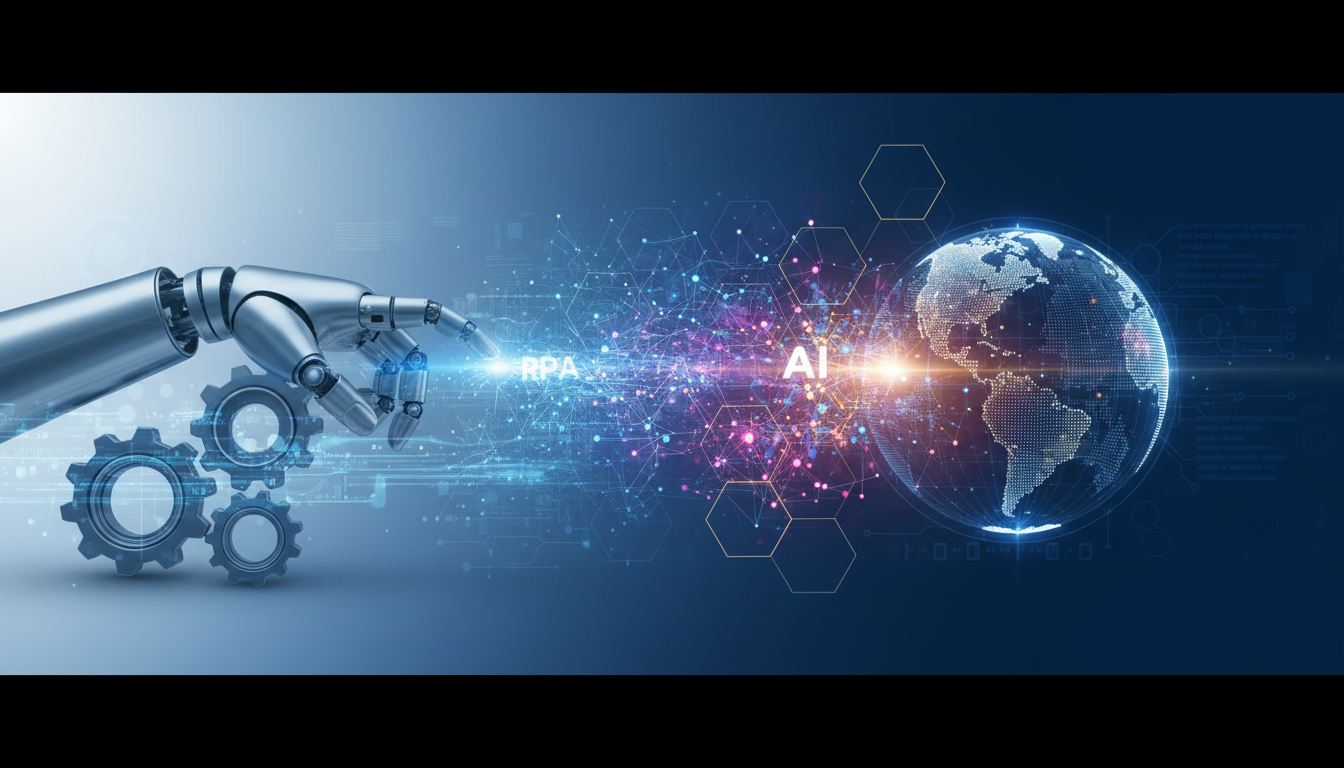
From RPA to AI: Revolutionizing the Future of Automation
The landscape of automation is undergoing a transformative shift, with Robotic Process Automation (RPA) and Artificial Intelligence (AI) paving new paths in efficiency and innovation. As businesses strive to optimize operations and cut costs, the synergy between RPA and AI stands as a revolutionary force reshaping how tasks are automated and decisions are made.
The Role of RPA in Automation
Robotic Process Automation has long served as a cornerstone in the realm of automation. By automating repetitive, rule-based tasks, RPA has enabled businesses to streamline processes like data entry, invoice processing, and report generation. This technology has been particularly impactful in sectors such as finance, operations, and customer support, where large volumes of structured data need handling.
However, the limitations of RPA are becoming more apparent as business processes evolve. Traditional RPA systems excel in stable environments with predictable inputs, but they struggle when faced with unstructured data or when processes change frequently. Maintenance overheads increase as bots require regular updates to adapt to new conditions, often limiting the long-term value of RPA.
The Advent of AI in Automation
AI introduces a new dimension to automation, addressing the limitations of RPA by offering adaptive and intelligent solutions. AI-driven systems can interpret context and manage tasks involving unstructured data, such as text and images. This capability is particularly beneficial for processes that involve complex decision-making and communication tasks, areas where traditional RPA falls short.
Vendors known for their RPA solutions, like Appian and Blue Prism, are incorporating AI to enhance their offerings. AI's ability to summarize documents, extract key details, and respond to natural language queries provides a level of flexibility and adaptability that RPA alone cannot achieve. As a result, automation is no longer confined to rigid rule-based systems but has evolved into a more dynamic and responsive tool.
Intelligent Automation: Combining RPA and AI
The integration of AI with RPA leads to what is termed "intelligent automation," a paradigm that combines the strengths of both technologies. Rather than replacing RPA, AI complements it by handling variations in input data and enhancing decision-making capabilities. This creates a more resilient automation framework capable of adjusting to diverse inputs without extensive reconfiguration.
In practice, intelligent automation involves using AI to interpret and categorize data, which is then processed by RPA bots following predefined steps. This hybrid approach allows businesses to extend the reach of automation without discarding existing RPA infrastructure. For example, AI can analyze incoming messages, extract relevant information, and pass structured data to RPA for further processing, making the overall workflow more efficient.
The Continued Relevance of RPA
Despite the advancements brought by AI, RPA remains crucial in many business settings. Tasks involving structured data and stable workflows, such as payroll processing and compliance checks, still benefit greatly from RPA's predictability and consistency. In regulated environments, where traceability and control are paramount, RPA's defined steps and reliable outputs are highly valued.
The transition towards intelligent automation is gradual, allowing businesses to leverage AI enhancements while maintaining the reliability of existing RPA systems. This gradual shift ensures that investments in current RPA technologies are protected, while also enabling companies to explore the potential of AI-driven automation.
The Future of Automation
The journey from RPA to AI-driven automation is not about replacing one technology with another but about creating a harmonious integration that maximizes efficiency and innovation. As companies continue to explore the possibilities of AI, the focus is on finding the right balance—using AI where it offers the most value and relying on RPA for tasks where it excels.
Organizations are encouraged to embrace this transformation, recognizing that intelligent automation offers a competitive edge in a rapidly evolving business landscape. By understanding the strengths and limitations of both RPA and AI, businesses can strategically deploy these technologies to drive growth and enhance operational efficiency.
In conclusion, the revolution in automation is well underway, with RPA and AI leading the charge. As businesses adapt to this new era, the future promises a landscape where intelligent automation is not just an asset but a necessity for success.
Saksham Gupta
Founder & CEOSaksham Gupta is the Co-Founder and Technology lead at Edubild. With extensive experience in enterprise AI, LLM systems, and B2B integration, he writes about the practical side of building AI products that work in production. Connect with him on LinkedIn for more insights on AI engineering and enterprise technology.