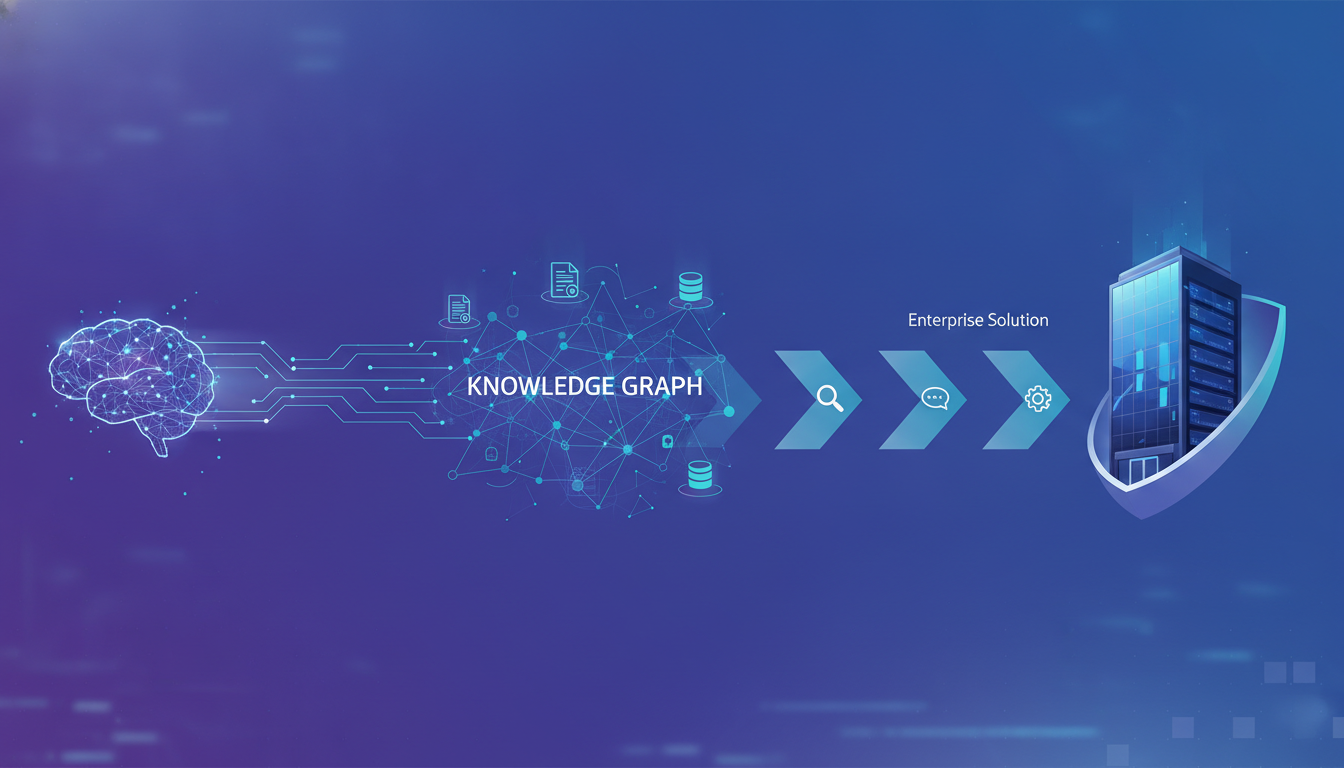
Improving Retrieval Quality in RAG Systems for Reliable LLM Implementation
Hook
In the rapidly evolving landscape of AI, enterprises often struggle with unreliable outputs from their language models. This inconsistency is frequently traced back to poor retrieval quality in Retrieval-Augmented Generation (RAG) systems. For organizations aiming to implement reliable large language model (LLM) solutions, understanding and improving retrieval quality is crucial.
Answer-first summary
Improving retrieval quality in RAG systems is essential for reliable LLM implementation because it directly affects the accuracy and relevance of the model's outputs. Enterprises can enhance retrieval by optimizing embedding models, refining chunking strategies, and ensuring up-to-date indexing. These improvements lead to better information grounding, reducing hallucinations and increasing the trustworthiness of AI-generated responses.
Why is retrieval quality crucial for RAG systems?
Retrieval quality in RAG systems is the linchpin for accurate and reliable AI outputs. At its core, RAG connects language models with external knowledge bases, allowing them to generate responses that are informed by up-to-date and relevant information. When the retrieval layer fails, the AI is left to rely on its internal parameters, often leading to hallucinations—responses that are plausible but factually incorrect. This is especially problematic in enterprise settings where decisions might be based on AI outputs.
For instance, in our work with the Ministry of Statistics in India, we observed that improving retrieval precision significantly enhanced the reliability of outputs in their RAG system. By ensuring that the retrieval process consistently delivers relevant and accurate information, enterprises can significantly reduce the risk of misinformation and enhance the overall performance of their LLM systems.
How does retrieval failure lead to hallucinations?
Retrieval failures in RAG systems manifest in several ways, each contributing to the phenomenon of hallucination. One common failure is retrieval drift, where retrieved documents are semantically similar but contextually irrelevant to the query. This often happens with complex, multi-hop queries. Another issue is context truncation, where retrieved data exceeds the model's context window, leading to arbitrary truncation and loss of critical information.
These issues are compounded by stale index poisoning, where outdated information continues to rank highly in retrieval results. This is particularly concerning for enterprises dealing with dynamic data environments. At EdubildAI, our experience with Cleo's Zendesk RAG system demonstrated that addressing these retrieval failures reduced hallucinations and improved customer support outcomes.
What are the dimensions of retrieval quality improvement?
Improving retrieval quality in RAG systems involves multiple dimensions. First, the selection of an appropriate embedding model is crucial. General-purpose models might suffice for broad applications, but domain-specific models often yield better results in specialized fields like legal or medical data.
Second, the chunking strategy plays a significant role. Effective chunking respects semantic boundaries, ensuring that each chunk of data is contextually complete. This approach enhances the relevance and accuracy of the retrieved information. Additionally, maintaining an up-to-date index is vital to prevent the retrieval of outdated or irrelevant information.
Why scaling the model isn't a solution?
Many enterprises mistakenly believe that scaling their LLMs can compensate for poor retrieval quality. However, without reliable retrieval, even the most advanced models generate coherent yet incorrect outputs. Larger models may produce more fluent hallucinations, but they cannot correct flawed input data.
Our projects have shown that smaller models with high-quality retrieval often outperform larger models with degraded retrieval. For instance, in our Mohan Impex ERP deployment, focusing on retrieval quality rather than model size led to more accurate and reliable system outputs.
What this means for your organization
For organizations, investing in retrieval quality is a strategic decision that impacts the effectiveness of AI systems. By enhancing the retrieval layer, enterprises can ensure that their LLMs operate on accurate, relevant data, leading to more reliable outputs. This is particularly important in sectors where AI recommendations influence critical business decisions.
Improving retrieval quality involves a commitment to continuous evaluation and optimization. Organizations should regularly benchmark their retrieval systems, update their knowledge bases, and refine their chunking strategies. By doing so, they not only improve current system performance but also future-proof their AI investments against evolving data landscapes.
FAQ
What is a RAG system? A Retrieval-Augmented Generation (RAG) system combines LLMs with external knowledge bases to provide more informed and accurate AI outputs. It retrieves relevant data to supplement the model's inherent capabilities.
How do you improve retrieval quality? Improving retrieval quality involves selecting the right embedding model, optimizing chunking strategies, and ensuring that the index is current and relevant to the queries being processed.
Can retrieval quality affect model performance? Yes, retrieval quality directly affects model performance by determining the relevance and accuracy of the data used in generating AI outputs. Poor retrieval quality leads to hallucinations and unreliable outputs.
Why not just use a larger LLM? While larger LLMs have more capabilities, they cannot compensate for poor retrieval. They may produce fluent but incorrect outputs if the retrieved information is flawed. High-quality retrieval is essential regardless of model size.
Closing call-to-action
To explore how EdubildAI can enhance retrieval quality in your RAG systems and improve the reliability of your LLM implementations, contact us today.
Saksham Gupta
Founder & CEOSaksham Gupta is the Co-Founder and Technology lead at Edubild. With extensive experience in enterprise AI, LLM systems, and B2B integration, he writes about the practical side of building AI products that work in production. Connect with him on LinkedIn for more insights on AI engineering and enterprise technology.