Implementing Multi-Tenancy in RAG Systems for Enhanced Data Security and User Isolation
Hook: Why Multi-Tenancy Matters for RAG Systems
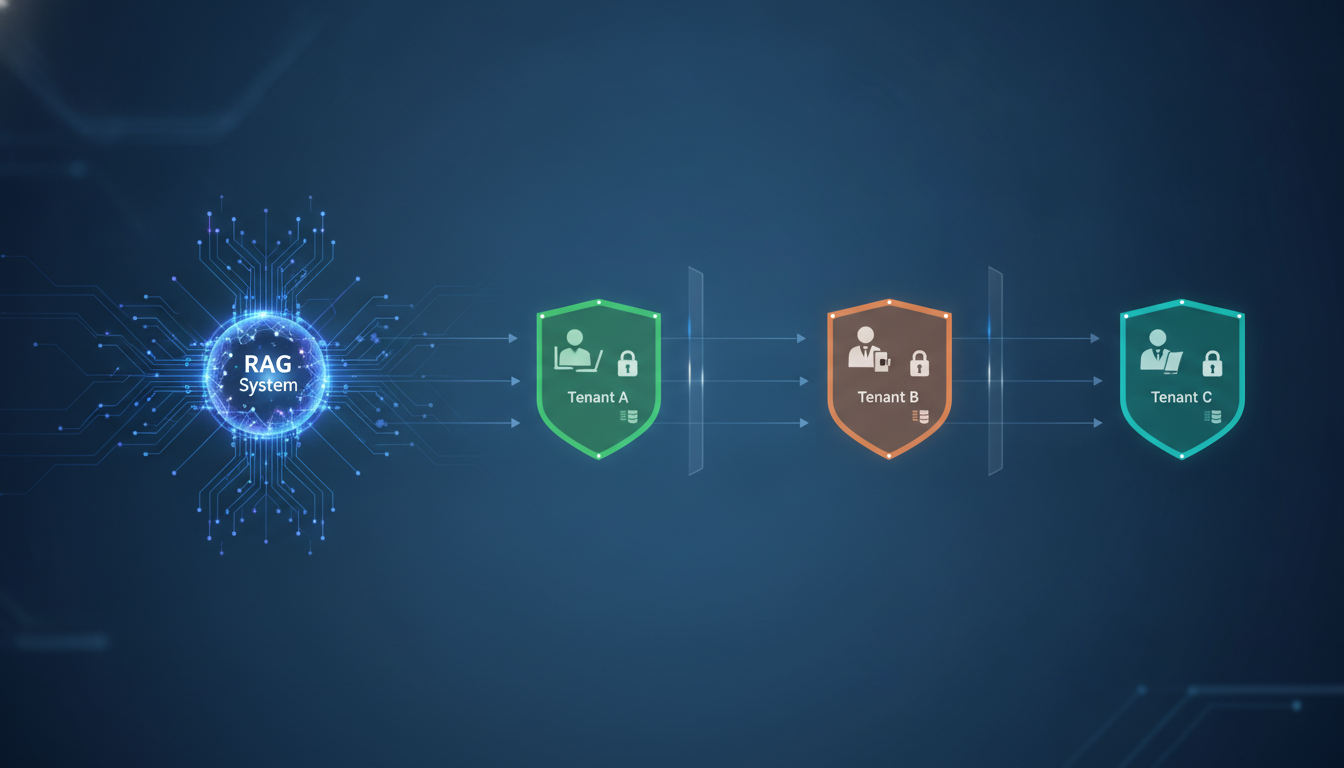
In the realm of enterprise AI, data security and user isolation are paramount. Many organizations face challenges in ensuring that sensitive data remains confidential and accessible only to authorized users. Multi-tenancy in Retriever-Augmented Generation (RAG) systems addresses these concerns by allowing multiple users to operate independently within the same system, thus preventing unauthorized data access.
Answer-first Summary
Implementing multi-tenancy in RAG systems enhances data security by ensuring that each user's data is isolated and accessible only to them. This involves tagging documents with user-specific metadata and configuring retrieval engines to honor these boundaries. Enterprises can thus maintain confidentiality and prevent data breaches, making multi-tenancy an essential feature for secure RAG deployments.
How Does Multi-Tenancy Work in RAG Systems?
Multi-tenancy in RAG systems is achieved by associating each document with metadata that identifies the user who indexed it. When a user queries the system, the retriever component filters documents based on this metadata, ensuring that only relevant documents are accessed. This approach requires careful design of the indexing and query phases. For example, when indexing, user-specific metadata is added to each document. During querying, the retriever uses this metadata to filter results, ensuring users only access their data.
A practical implementation can be seen in our work with India's Ministry of Statistics (MoSPI), where a RAG system was deployed to handle sensitive data while ensuring user isolation. By incorporating multi-tenancy, we safeguarded against unauthorized data access, thereby strengthening the system's overall security posture. Learn more about our RAG systems.
What Are the Technical Requirements for Multi-Tenancy?
Implementing multi-tenancy involves several technical considerations. Firstly, a robust metadata management system is essential to tag and retrieve documents correctly. This includes developing an ingestion pipeline that processes documents, extracts metadata, and indexes them appropriately.
Furthermore, the retrieval engine must be capable of filtering documents based on user-specific metadata. This requires sophisticated query engines and filters, such as those used in our projects with Cleo for first-response automation, where user-specific data handling was crucial. Explore our AI agent solutions.
Challenges in Implementing Multi-Tenancy
One of the primary challenges in implementing multi-tenancy is ensuring that the system scales efficiently with the number of users. As more users are added, the system must manage an increasing volume of metadata and queries without degrading performance.
Additionally, maintaining strict data isolation requires rigorous testing and validation. Any lapses could lead to data breaches, undermining the trust in the system. At EdubildAI, we address these challenges by leveraging advanced indexing techniques and continuous monitoring to ensure system integrity.
How Does Multi-Tenancy Benefit Enterprises?
For enterprises, multi-tenancy offers significant advantages, particularly in terms of data security and operational efficiency. By isolating user data, organizations can prevent unauthorized access, thereby reducing the risk of data breaches and compliance violations.
Moreover, multi-tenancy allows for efficient resource utilization, as multiple users can share the same infrastructure while maintaining data privacy. This leads to cost savings and streamlined operations, making it a valuable feature for enterprises looking to optimize their AI deployments.
Implementation Considerations
When implementing multi-tenancy, organizations must consider the trade-offs between complexity and security. While multi-tenancy enhances data security, it also introduces additional layers of complexity in system design and management.
Enterprises must invest in robust infrastructure and skilled personnel to manage these complexities effectively. Additionally, ongoing maintenance and updates are crucial to ensure that the system adapts to evolving security threats and user requirements. Discover our on-premise LLM deployment services for tailored solutions.
FAQ
Q: What is the primary benefit of multi-tenancy in RAG systems? A: The primary benefit is enhanced data security through strict user isolation, ensuring that each user's data is only accessible to them.
Q: How does multi-tenancy affect system performance? A: While it introduces additional complexity, a well-designed system can maintain performance by efficiently managing metadata and queries.
Q: Can multi-tenancy be implemented in existing RAG systems? A: Yes, existing systems can be upgraded to support multi-tenancy with appropriate modifications to indexing and retrieval components.
Closing Call-to-Action
For enterprises looking to enhance their RAG systems with multi-tenancy, contact us at EdubildAI to explore tailored solutions that meet your security and operational needs.
Saksham Gupta
Founder & CEOSaksham Gupta is the Co-Founder and Technology lead at Edubild. With extensive experience in enterprise AI, LLM systems, and B2B integration, he writes about the practical side of building AI products that work in production. Connect with him on LinkedIn for more insights on AI engineering and enterprise technology.